
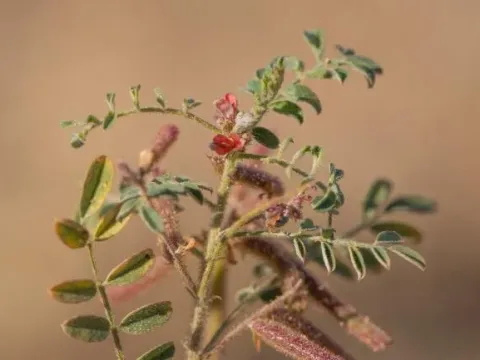
Indigofera colutea
Indigofera colutea
Indigofera colutea is a notable member of the Fabaceae family, recognized for its hardiness and adaptation to arid environments. It typically grows as a small herbaceous perennial or subshrub, exhibiting high drought tolerance in its native habitats.
What the section contains
Indigofera colutea
The plant originates from tropical and subtropical regions of Africa and Asia. Its botanical architecture is designed to minimize moisture loss, featuring small leaves and a robust root system capable of penetrating deep soil layers to find available water.
Regarding soil requirements, the species thrives in well-drained, sandy, or stony soils. It is highly intolerant of waterlogged conditions, which makes site selection for drainage and aeration the primary concern for agronomists and land managers.
Climate preferences involve high levels of solar radiation and warm temperatures. It flourishes in regions where other forage crops struggle, making it an excellent candidate for marginal lands and restoration projects in arid zones.
In agricultural practice, this legume is valued for its nitrogen-fixing capabilities. It serves as an effective soil enhancer, improving fertility naturally without the excessive need for synthetic fertilizers, thus supporting sustainable farming models.
Typical threats include soil-borne pathogens like root rots, which primarily manifest under conditions of excessive moisture or poorly drained fields. Maintaining a proper soil moisture balance is essential for preventing these fungal developments.
Insect pests, such as weevils and aphids, may target the foliage and reproductive structures of the plant. Integrated pest management strategies, emphasizing biological control and early detection, are recommended for maintaining crop health.
Leaf spot diseases can occur during humid seasons if air circulation between plants is insufficient. Proper spacing during sowing is crucial to ensure that the microclimate within the canopy remains unfavorable for pathogen growth.
Nematodes are another concern in light, sandy soils. Implementing a crop rotation cycle that includes non-host species is an effective preventive measure for reducing nematode populations in the long term.
Consistent monitoring of the field is necessary for the successful production of Indigofera colutea. Proactive management of the environment significantly reduces the need for heavy chemical interventions in these resilient crops.