
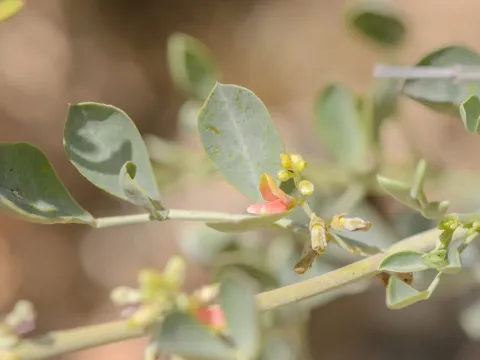
Indigofera coerulea
Indigofera coerulea
Indigofera coerulea is a perennial shrub belonging to the Fabaceae family. It is historically significant as a source of high-quality natural indigo dye, which is obtained through the fermentation of its green leaves.
What the section contains
Indigofera coerulea
Native to the tropical and subtropical regions of Africa and Asia, this plant thrives in warm climates with high sunlight intensity. It is an excellent example of a crop adapted to high-temperature environments.
The plant requires well-drained, fertile soil types, such as loams or sandy soils. It is sensitive to waterlogging, so adequate soil drainage is essential to prevent root diseases and ensure healthy plant development.
Optimal growth temperatures for Indigofera coerulea range from +25°C to +35°C. While the plant shows some drought tolerance, consistent moisture is necessary to achieve a high biomass yield of leaves, which are the main source of the dye.
As a legume, it is capable of nitrogen fixation, which benefits soil health and reduces the overall need for nitrogenous fertilization during the cultivation cycle.
The primary threats to Indigofera coerulea involve fungal pathogens, particularly those that thrive in high humidity. Powdery mildew and various forms of root rot can severely impact yield if environmental conditions are not managed.
Pests such as aphids and various lepidopteran larvae can damage the foliage. Since the leaves are the commercial product, minimizing pest damage is critical to ensuring the quality and consistency of the indigo extract.
Preventive measures include maintaining proper row spacing to ensure air circulation and adhering to a strict irrigation regime that prevents excessive humidity levels around the foliage.
Integrated pest management strategies are often employed to control infestations without relying heavily on synthetic pesticides, as residue management is important for the processing phase.
Regular field inspection is key to early detection of stress factors, allowing for targeted intervention and ensuring that the plantation remains productive throughout the growing season.
Harvesting Indigofera coerulea is typically timed to occur before full flowering, as this is when the concentration of indican in the leaves is at its peak. This precise timing ensures maximum pigment yield.
The harvest process involves cutting the aerial parts of the shrub. Because the precursor compounds can degrade rapidly after harvest, the biomass must be processed immediately to prevent oxidation and loss of quality.
The standard processing method involves soaking the freshly cut plant material in water tanks to initiate controlled fermentation. This step is essential to convert the plant compounds into the stable blue pigment known as indigo.
Depending on local climate conditions, multiple harvests per season are possible. After each cut, the plants are allowed to regenerate, provided they receive sufficient water and nutrients.
Effective post-harvest management and timely processing are the most important factors for the success of a commercial indigo plantation, as the dye quality depends heavily on these logistical steps.