
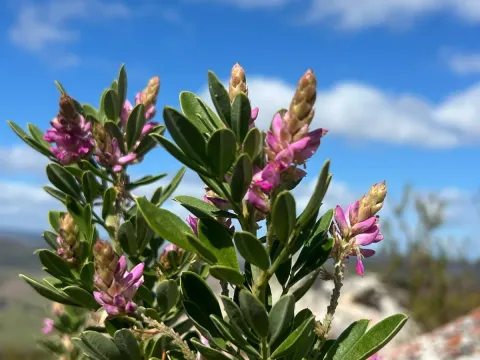
Indigofera cytisoides
Indigofera cytisoides
Indigofera cytisoides is a hardy shrub belonging to the Fabaceae family. Propagation is primarily done via seeds, which should be sown in the spring once the soil temperature is sufficiently warm.
What the section contains
Indigofera cytisoides
Given the hard seed coat, pre-sowing scarification is highly recommended to increase the germination rate and ensure uniform seedling emergence.
Seeds should be planted at a shallow depth of about 1.5 to 2 centimeters in a well-prepared seedbed to facilitate easy sprouting.
For those in cooler climates, indoor seed starting in greenhouse conditions is preferred to give the plants a head start before the final transplanting.
Consistency in moisture during the initial germination phase is critical, though avoid waterlogging the substrate to prevent seed decay.
This species thrives in full sun exposure, which is necessary to promote vigorous vegetative growth and abundant flowering throughout the season.
The ideal soil for Indigofera cytisoides is well-drained, fertile, and slightly acidic to neutral in pH to maintain optimal nutrient absorption.
While the plant shows moderate drought tolerance once established, consistent watering during the growing season significantly enhances its health.
Soil structure should be friable and aerated, allowing deep root penetration which is characteristic of the legume family's growth habit.
Protection from severe frost is necessary in colder zones, as the plant may suffer dieback if exposed to prolonged freezing temperatures during winter.
The agricultural value of Indigofera cytisoides is largely attributed to its role as a nitrogen-fixing legume, which improves soil fertility.
Biomass production is optimized through careful pruning, which encourages the development of a dense, bushy structure ideal for landscape applications.
Yield metrics for this plant focus on foliage quality and floral density rather than food production, making it a valuable ornamental and soil-improving asset.
Seed yield, when required for further propagation, depends on successful pollination and favorable weather conditions during the late summer development phase.
Sustainable management involves regular maintenance to ensure the plant continues to produce high levels of organic matter for soil enrichment.
Common pests include aphids and spider mites, which can cause significant damage to the foliage and young terminal shoots if left unchecked.
Fungal diseases like powdery mildew are more prevalent in environments with high humidity and poor air circulation within the shrub canopy.
Integrated pest management strategies, such as using horticultural soaps or encouraging beneficial insects, are effective ways to protect the plants.
Regular monitoring for signs of wilt or fungal spots is essential to detect problems before they spread throughout the entire planting area.
Proper spacing and site selection are the most effective preventative measures to reduce the impact of these typical plant threats.