
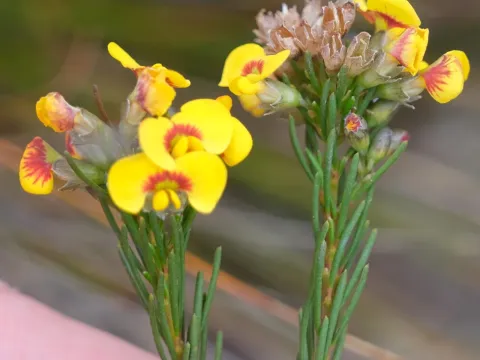
Dillwynia
Dillwynia
Dillwynia is a genus of evergreen shrubs belonging to the pea family, Fabaceae. Native to Australia, these plants are well-adapted to various habitats ranging from woodlands to heathlands, reflecting the diverse and often challenging environmental conditions of the continent.
What the section contains


Dillwynia
Cultivation of Dillwynia requires strict attention to soil composition. It thrives in well-draining, sandy, or stony substrates. Poor drainage is the most significant limiting factor, as the roots are highly susceptible to rot if allowed to stand in saturated conditions.
The plant demands high levels of sunlight to maintain its structural integrity and encourage flowering. In indoor or greenhouse cultivation, supplemental lighting may be necessary if natural light levels are insufficient, as low-light environments often lead to leggy and weak growth.
In terms of agricultural utility, Dillwynia is strictly an ornamental crop. It is highly valued by horticulturists for its bright yellow to orange-brown flowers and unique foliage, making it a desirable specimen for rock gardens and specialized xeriscaping projects.
Biologically, Dillwynia is characterized by its narrow, sometimes needle-like leaves and papilionaceous flowers. Its ability to fix nitrogen through symbiotic relationships with rhizobia makes it a self-sustaining plant in its natural habitat, though in containers, it may require specific nutrient management.
The primary threats to the health of Dillwynia are fungal pathogens, specifically those causing root rot, such as Phytophthora. These are frequently triggered by waterlogged soil and high humidity levels around the root collar.
Common insect pests include mealybugs and spider mites, which can thrive in greenhouse environments. These pests damage the foliage and can transmit secondary infections if left untreated for extended periods.
Managing the plant's environment is the best form of protection. Ensuring excellent air circulation around the canopy helps prevent the buildup of pathogens and reduces the likelihood of pest infestation.
Regular monitoring of leaves and stem nodes is essential for early detection of pest activity. If an outbreak occurs, horticultural soaps or specific acaricides should be applied according to the manufacturer's guidelines.
Sanitation practices, such as the removal of dead or decaying plant material and the disinfection of pruning tools, are crucial steps in maintaining the overall health and longevity of the shrub.