
Dinizia
Dinizia
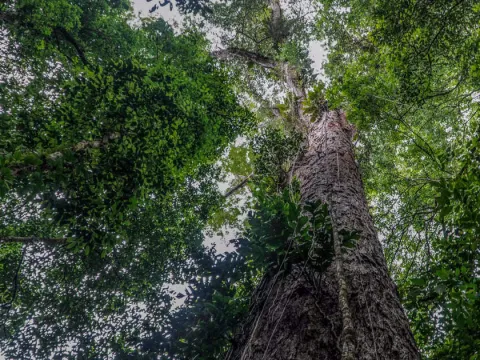
Dinizia is a genus of large tropical trees belonging to the legume family (Fabaceae). The most prominent species, Dinizia excelsa, is native to the Amazon rainforest, where it is highly valued for its massive stature and exceptional timber, locally known as angelim pedra.
What the section contains

Dinizia
This species thrives in high-temperature environments with year-round humidity. It requires deep, fertile, and well-drained soils to support its rapid growth and extreme height, which can exceed 60 meters. The tree acts as a giant of the forest canopy, requiring significant light exposure.
Botanically, the tree exhibits a bipinnate leaf structure and produces small flowers that are crucial for supporting local pollinators. Its root system is extensive and deeply embedded, which is essential for nutrient uptake and stability in the nutrient-leached soils of the tropical basin.
Regarding silviculture, Dinizia requires careful management to ensure successful establishment. Planting must occur in areas that mimic its natural habitat, with adequate spacing to allow for the massive expansion of the crown and root zone as the tree matures over several decades.
The economic use of Dinizia is focused on its dense, hard, and rot-resistant wood. It is widely used for heavy construction, bridge building, and flooring, thanks to its natural resistance to decay and insects, making it a sustainable choice for long-term infrastructure projects.
The primary threats to Dinizia populations include habitat loss due to deforestation and land conversion for agriculture. The fragmentation of the Amazon forest reduces the availability of suitable nesting and growth sites for this long-lived species.
Wood-boring beetles and certain termite species present a secondary risk to the wood quality, though the tree’s natural density and chemical composition act as a robust deterrent. Generally, the heartwood is remarkably resistant to pest colonization.
Fungal infections can occur, particularly when the trees are stressed by prolonged drought or improper water management in plantation settings. Monitoring for symptoms like crown dieback or root decay is necessary for early detection and mitigation of disease outbreaks.
Maintaining biological diversity is key to preventing widespread pest infestation. Monocultures of Dinizia are discouraged, as a diverse forest environment naturally regulates populations of potential pathogens through the presence of beneficial organisms.
Management strategies involve regular inspection of forest patches to identify compromised trees. Removing infected or deadwood promptly prevents the buildup of pathogen reservoirs, ensuring the health and productivity of the surrounding forest stand.