
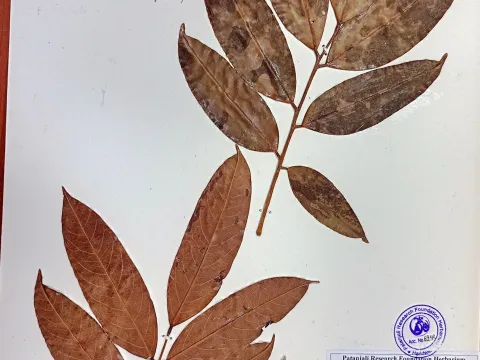
Derris marginata
Derris marginata
Derris marginata belongs to the Fabaceae family and is a woody climbing vine native to the tropical regions of Southeast Asia.
What the section contains
Derris marginata
The plant thrives in tropical climates where high temperatures and significant humidity are maintained throughout the entire year.
It requires deep, well-drained loamy soils enriched with organic matter, which are typical of the alluvial tropical forest regions it originates from.
Derris marginata is well-adapted to partial shade conditions, making it suitable for growing in environments that mimic the floor of a tropical rainforest.
Soil pH levels should be maintained in the slightly acidic to neutral range to ensure optimal nutrient uptake and vigorous root growth for the vine.
The primary economic value of this crop is its roots and stems, which contain rotenone, a natural insecticide used in organic farming.
Yields are typically measured by the dry mass of roots harvested from mature plants, usually after 3 to 5 years of steady development.
The plant is cultivated systematically in tropical areas to supply the pharmaceutical and agricultural industries with raw material for bio-pesticides.
Proper agronomic management, including pruning and spacing, significantly influences the concentration of active compounds within the plant tissues.
Post-harvest processing involves cleaning, drying, and grinding the plant matter to facilitate the extraction of valuable chemical components.
Common threats include fungal pathogens that exploit high-humidity environments, potentially causing root rot or stem blight in plantation settings.
Leaf-eating insects can cause significant defoliation, which hampers the plant's ability to synthesize carbohydrates and impacts overall crop vigor.
Root-knot nematodes represent a serious threat to the underground parts of the plant, often leading to stunted growth and lower final yields.
Competition from weeds is particularly severe during the early growth stages, necessitating proactive field management and mulching practices.
Consistent field scouting and the application of integrated pest management strategies are essential to protect the long-term health of Derris crops.