
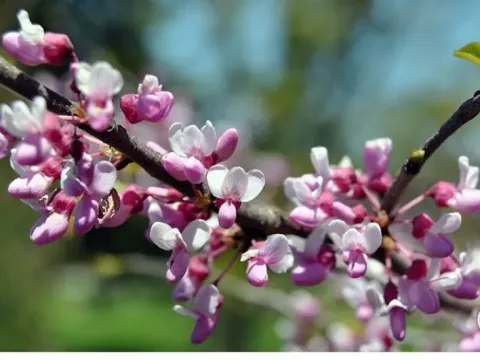
Racemose redbud
Cercis racemosa
Cercis racemosa is typically propagated through seeds, which require specific preparation to overcome their natural dormancy. Due to the hard seed coat, scarification followed by cold stratification for approximately 60 to 90 days is essential to trigger successful germination.
What the section contains
Racemose redbud
Sowing should ideally take place in early spring after the risk of frost has passed. Seeds are placed into a well-draining, sterile growing medium at a depth of about 1 to 2 centimeters to ensure optimal moisture retention during the initial stages of development.
Consistency in temperature is crucial for the germination process. Keeping the seed trays in a warm, bright environment once stratification is complete significantly improves the emergence rates of seedlings, which are often delicate in their infancy.
Young seedlings require careful attention regarding irrigation to avoid damping-off, a common fungal issue. Providing adequate ventilation and avoiding overcrowding in the seed tray helps maintain a healthy microclimate for the growing plants.
Transplanting seedlings from containers to the ground should only occur when the root system is well-established. It is advisable to minimize root disturbance during this process to ensure the plant settles successfully into its permanent location in the landscape.
Cercis racemosa, a member of the Fabaceae family, originates from the mountainous regions of central and western China. It is highly prized for its unique, cascading racemes of flowers, which distinguish it from other redbud species common in cultivation.
The tree thrives in fertile, well-draining soils with a neutral to slightly alkaline pH. Proper site selection is vital, as the species prefers full sun but can benefit from some protection from harsh afternoon heat and strong, desiccating winds that might break its branches.
Climatic adaptability is a key factor; while it is moderately cold-hardy, younger trees often require protective measures such as mulching or burlap wrapping during their first few winters to survive extreme temperature drops that could damage their cambium layer.
Water requirements vary by season, with regular irrigation needed during the first few growing seasons to promote a deep root system. Once established, the tree demonstrates moderate drought tolerance, though supplemental watering during prolonged dry spells enhances flowering quality.
Cultural practices include light pruning to maintain a strong central leader and remove any crossing or dead branches. This promotes airflow through the crown, which is essential for reducing the humidity levels that often lead to foliage disease in denser trees.
Verticillium wilt remains the most serious threat to Cercis racemosa. This soil-borne fungal disease blocks the vascular system, leading to wilting and branch death. Prevention involves choosing healthy planting sites and ensuring proper drainage to keep the roots robust.
Pests such as aphids and scale insects frequently colonize the tender young leaves and stems. Management involves regular monitoring and the use of insecticidal soaps or systemic pesticides when high pest densities threaten the overall vitality of the tree.
Leaf spot diseases, often encouraged by excessive moisture on foliage, can reduce the aesthetic appeal of the tree during mid-summer. Maintaining good air circulation and removing fallen debris helps mitigate the spread of fungal spores throughout the canopy.
Bark-boring insects may attack trees that are already weakened by environmental stress or poor soil conditions. Keeping the tree vigorous through balanced fertilization and proper watering is the most effective natural defense against such destructive pests.
Sunscald on the trunk is an additional concern for younger or thin-barked trees in open areas. Using white tree wraps or applying light-colored whitewash to the trunk can reflect intense solar radiation and prevent the development of deep, infection-prone cracks.