
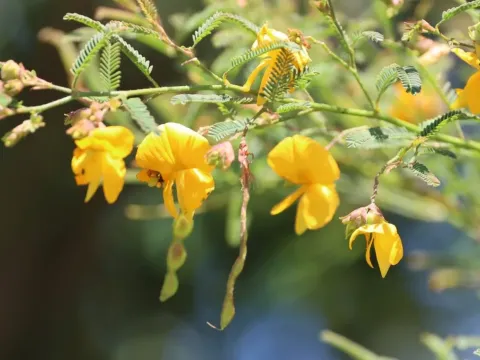
Aeschynomene montevidensis
Aeschynomene montevidensis
Aeschynomene montevidensis is a warm-season crop that requires well-warmed soil for successful germination. Sowing should ideally be scheduled at the beginning of the rainy season to ensure sufficient moisture for seedling establishment.
What the section contains
Aeschynomene montevidensis
Precision planting is recommended to achieve the correct sowing depth, typically between 1 and 2 centimeters. This ensures the seeds are placed in a firm, moist seedbed while still allowing for easy emergence.
In various tropical regions, sowing times are adjusted according to the local precipitation cycle to prevent moisture stress during the early developmental phases. Early sowing allows the crop to maximize the growing season.
Seeding rates are adjusted based on the intended use, with higher densities preferred for dense forage production. Seed scarification is often used as an agronomic tool to improve field emergence uniformity.
The crop shows strong seedling vigor under suitable moisture conditions, which allows it to successfully compete with weeds even in the early stages of its development cycle.
Aeschynomene montevidensis is a legume species highly valued for its adaptation to specific environmental niches. It is particularly well-known for its ability to thrive in wet conditions and waterlogged soils.
The plant demonstrates high adaptability to various soil types, including heavy clays where many other legumes struggle. Its tolerance to acidic soil conditions makes it a viable choice for challenging agricultural environments.
Climate requirements include high temperatures and ample sunlight throughout the growing period. The plant is sensitive to frost, which limits its commercial cultivation to frost-free regions or specific seasons.
A crucial biological feature of this crop is its symbiosis with nitrogen-fixing bacteria. This relationship allows the plant to flourish in nitrogen-poor soils and naturally enrich the land for subsequent crops.
Proper agronomic management requires monitoring soil moisture levels. While the plant tolerates wetness, extended drought during the peak growth season can negatively impact its overall biomass production.
The yield potential of Aeschynomene montevidensis is considered significant, especially when integrated into intensive livestock production systems. Multiple cuttings per season are achievable under favorable conditions.
Overall productivity depends on soil fertility and the implementation of a balanced fertilization program. Applying phosphorus and potassium can enhance root development and increase the protein content of the foliage.
This crop is excellent for pasture-based feeding, providing high-quality forage throughout the active growing period. Its high regrowth energy after cutting allows for efficient biomass turnover.
To maximize yields, it is important to follow proper harvesting protocols that minimize leaf loss, as the leaves contain the highest density of nutrients. Proper pasture management prevents overgrazing and maintains field longevity.
The economic value of this crop is determined by its high nutritional profile, serving as a reliable source of protein for ruminants and reducing the need for costly external feed supplements.
Pathogenic fungi represent the primary threat to this crop, especially in environments with high humidity and poor ventilation. Preventive strategies include crop rotation and maintaining optimal stand density.
Pest insects, particularly those that feed on foliage, can reduce the total photosynthetic area. Integrated Pest Management (IPM) practices are recommended to keep pest populations below economic damage thresholds.
Root rot issues can occur in poorly drained areas where water remains stagnant for long periods. Ensuring effective field drainage is a critical step in maintaining crop health and vigor.
Viral diseases, usually transmitted by sap-sucking insects, may occasionally affect the crop. Controlling weeds surrounding the fields is a standard procedure to eliminate natural reservoirs of plant viruses.
Effective disease management combines the selection of tolerant varieties with good cultural practices, ensuring that the canopy receives adequate air circulation throughout the growing season.
The harvesting of Aeschynomene montevidensis for forage should occur during the budding phase. This is when the concentration of crude protein and digestible nutrients reaches its maximum peak.
When producing hay, the use of a mower-conditioner is recommended to facilitate rapid drying of the thick stems. Proper moisture management in the windrows is essential for preventing mold growth in stored hay.
Silage production requires high-quality chopping and compaction equipment. Maintaining an anaerobic environment within the silo is essential to preserve the energy content of the stored forage.
When managed as a pasture crop, rotational grazing is encouraged. The timing of livestock entry should be based on the regrowth speed, ensuring that the plants are not over-defoliated.
A final cut at the end of the season should be performed carefully to ensure that the plants store enough carbohydrates in their roots to support survival and rapid regrowth in the following cycle.