
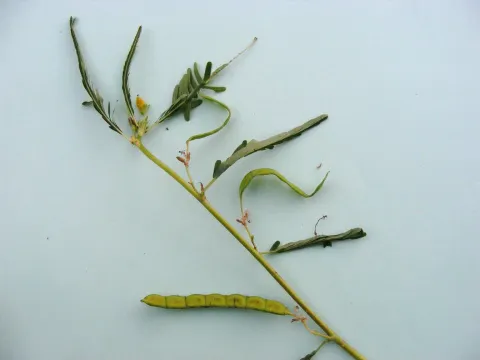
Aeschynomene uniflora
Aeschynomene uniflora
Sowing Aeschynomene uniflora must be synchronized with the onset of the rainy season to ensure the soil remains consistently moist for successful germination.
What the section contains
Aeschynomene uniflora
The optimal soil temperature for sowing ranges between 20 and 25 degrees Celsius, which promotes rapid root development and strong seedling emergence.
Seeds are typically sown in rows, allowing for adequate space to avoid inter-plant competition while maximizing the density of the forage stand.
In regions where the climate is controlled through irrigation, timing is adjusted to maintain the high soil moisture levels required by this species.
Proper seedbed preparation is essential, as the fine seeds of this legume require shallow planting depths to emerge effectively through the soil surface.
Aeschynomene uniflora is a member of the Fabaceae family, highly adapted to tropical climates and areas subject to frequent seasonal flooding.
It thrives in heavy, poorly drained clay or silty soils where many other agricultural crops would fail due to waterlogging and root hypoxia.
The plant requires high solar radiation levels throughout its lifecycle, as it is a strictly heliophilous species that performs poorly in shaded environments.
While tolerant of low-fertility soils, the plant benefits significantly from balanced phosphorus and potassium levels, which support symbiotic nitrogen fixation.
The species demonstrates excellent resilience to periodic submersion, making it an ideal choice for low-lying agricultural fields and wetland management.
The biomass yield of Aeschynomene uniflora is quite substantial when provided with adequate water and nutrients during its intensive growing season.
As a forage crop, it provides high-quality green material that is highly nutritious for livestock, provided it is harvested at the vegetative stage.
When utilized as a green manure, the crop significantly contributes to soil organic carbon sequestration and nitrogen enrichment of the farming plot.
Sustainable yield management involves multiple cuts per season, which encourages vigorous regrowth of the plant and prevents excessive woodiness of stems.
Seed production yield is sensitive to pollinator activity, requiring the maintenance of healthy insect populations within or near the cultivation area.
The primary threats to the crop include various fungal leaf spot pathogens that proliferate in high-humidity, low-airflow tropical environments.
Root-knot nematodes and other soil-borne pests can occasionally cause damage, particularly in fields where long-term monocropping is practiced.
Insect pests, such as lepidopteran larvae and aphids, can cause significant foliage loss if not managed through integrated pest control strategies.
Waterlogging coupled with high heat can sometimes lead to bacterial wilt, necessitating careful management of soil drainage patterns during extreme events.
Crop rotation and selecting resistant cultivars are recommended measures to mitigate the long-term impact of diseases on the health of the stand.