
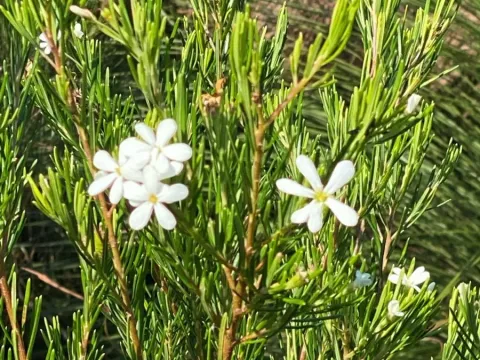
Ricinocarpos
Ricinocarpos Desf.
Ricinocarpos is a genus of evergreen shrubs belonging to the Euphorbiaceae family. Native primarily to Australia, these plants are known for their distinct appearance and adaptation to nutrient-poor, sandy, or rocky soil environments.
What the section contains


Ricinocarpos
Botanically, these shrubs feature narrow, often leathery leaves and are recognized for their showy, white-to-cream flowers. The plants have adapted to dry conditions, developing physiological traits that allow them to endure fluctuating levels of environmental moisture.
Regarding cultivation requirements, excellent drainage is the single most critical factor for success. Ricinocarpos thrives in soils with low fertility, and attempting to fertilize them with high-nitrogen mixtures often results in more harm than benefit.
Climate needs are strictly subtropical or temperate-mild. Because they are not frost-tolerant, these plants are generally restricted to conservatory or glasshouse cultivation in colder northern latitudes to prevent tissue damage.
The practical use of Ricinocarpos is predominantly ornamental. Its unique architectural form and seasonal blooms make it a specialized choice for botanical gardens or expert plant collectors focusing on arid-zone flora.
Ricinocarpos is highly susceptible to root diseases if the soil remains waterlogged. Pathogens such as Phytophthora are the most frequent cause of plant death in poorly drained beds.
Pests such as scale insects and spider mites may target the plant when it is grown under glass or in poor airflow conditions, leading to stunted leaf growth and general decline.
Environmental stress, such as extreme temperature fluctuations, can cause premature leaf drop, making the plant more susceptible to opportunistic fungal infections.
Effective management includes maintaining a dry crown area and ensuring that water is applied directly to the root zone, avoiding overhead irrigation that leaves foliage wet for extended periods.
Regular monitoring for early signs of yellowing leaves is vital, as this is often the first symptom of either water imbalance or impending pest infestation.