
Retuse spurge
Euphorbia retusa
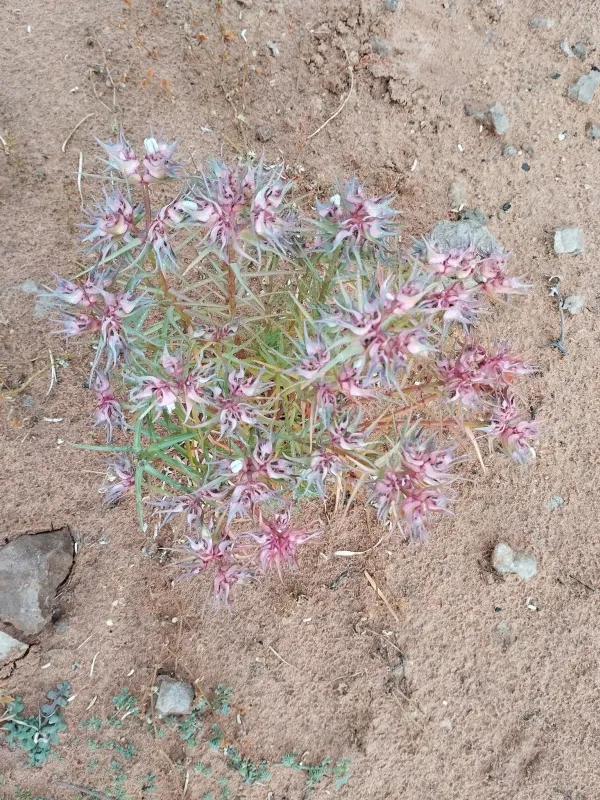
Description
Growing requirements
Retuse spurge (Euphorbia retusa) is a herbaceous perennial plant belonging to the Euphorbiaceae family. It is a well-adapted species known for its resilience in Mediterranean and arid environments.
The plant is native to North Africa, the Middle East, and Mediterranean Europe. It typically thrives in open fields, rocky hillsides, and sandy soil conditions where water availability is periodic.
Botanically, it is characterized by its succulent stems, milky latex sap, and uniquely retuse leaves. This morphology allows the plant to minimize water loss and persist through extreme heat.
It prefers well-drained, nutrient-poor, or sandy soils. In agricultural contexts, its deep root system allows it to compete aggressively with crops, especially in areas with limited tillage.
Management of this species is essential in commercial farming to prevent it from becoming an invasive weed, as it can propagate effectively through seeds and root fragments.
Main diseases and pests
Due to the presence of toxic milky latex, Euphorbia retusa is naturally resistant to many common insect pests, as the sap acts as a chemical deterrent against most generalist herbivores.
However, the plant is susceptible to certain fungal pathogens, particularly root rot, if the soil remains waterlogged for extended periods during rainy seasons.
Occasional infestations by specialized aphids or mites may occur, but they rarely reach levels that cause significant physiological damage to a healthy, established plant.
Agricultural control typically relies on a combination of mechanical removal and systemic herbicide application to manage its spread across cultivated plots.
Preventative measures, such as maintaining soil health and preventing seed dispersal, are considered the most effective strategies for controlling this plant in fields.