
Ridge-seed spurge
Euphorbia glyptosperma
Description
Growing requirements
Ridge-seed spurge (Euphorbia glyptosperma) is a member of the Euphorbiaceae family. It is an annual herbaceous plant recognized primarily as a weed in agricultural environments.
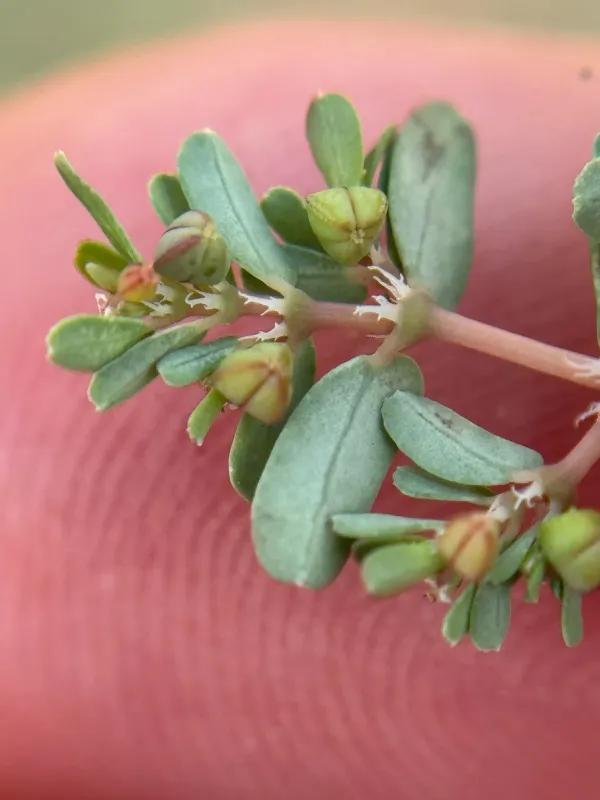
The plant is characterized by its prostrate, often reddish stems that form mats on the soil surface. Its leaves are small, oblong, and arranged oppositely, aiding in water retention under harsh conditions.
It thrives in open, sun-exposed areas with well-drained sandy or gravelly soils. The species is highly tolerant to heat and drought, allowing it to persist in degraded or dry habitats.
Originating from North America, it has spread to various regions globally, often invading fallow fields, roadsides, and cultivated land where it competes for resources.
The plant serves as an indicator of disturbed, poorly managed, or sandy soils, highlighting the need for strategic soil health improvement and precise weed management programs.
Main diseases and pests
The primary threat posed by this spurge is the out-competition of desired crops for light, moisture, and essential soil nutrients during critical growth stages.
The plant contains a milky latex that is toxic to livestock if ingested, rendering infested grazing lands hazardous for animal production.
Susceptibility to diseases such as powdery mildew or rust exists, but these rarely impact the overall population density of the weed in field conditions.
Insect pests, including certain beetles and mites, may feed on the foliage, but they have minimal biological control effect on the robust spread of the plant.
Management requires integrated strategies, including the use of pre-emergent herbicides and mechanical cultivation, to prevent the plant from reaching the seed-bearing stage.