
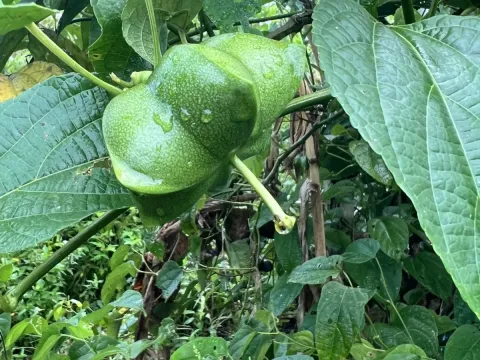
Sacha inchi
Plukenetia L.
Sowing Sacha Inchi is typically performed at the start of the rainy season to ensure seeds have optimal moisture for germination. In tropical regions, transplanting seedlings grown in nurseries is a common practice that significantly increases the survival rate of the plants in the field.
What the section contains

Sacha inchi
The optimal planting pattern requires the use of supporting structures or trellises, as Sacha Inchi is a vine. The distance between plants should be at least 2.5–3 meters to ensure adequate ventilation and ease of conducting agrotechnical work during the vegetation period.
Seeds require stratification or soaking before planting, which promotes uniform emergence. The planting depth should not exceed 2–3 centimeters to avoid hindering the growth of the young sprout through the soil layer.
An important condition for successful sowing is choosing a site with good lighting. The crop is highly sensitive to the lack of sunlight in the early stages of development, so shading from other trees in the first few months is highly undesirable.
The planting process is often combined with the application of organic fertilizers in the planting holes. This provides a quick start for the root system and establishes the foundation for the healthy development of the vine's aerial parts during intense growth.
Sacha Inchi, known botanically as Plukenetia volubilis, belongs to the Euphorbiaceae family. It requires a tropical climate with air temperatures between +20 and +35 degrees Celsius and abundant rainfall throughout the year for its development.
Soil requirements include a light, well-drained substrate. The plant does not tolerate waterlogging, which can lead to root rot, so areas with heavy clay soils require additional drainage and sand amendment.
The optimal soil pH level for Sacha Inchi is in the range of 5.0 to 6.5. When deviations towards an alkaline reaction occur, the vine's growth slows down significantly, which directly impacts the number of fruits formed.
The crop is highly responsive to potassium and phosphorus fertilizers. In commercial cultivation, the soil is regularly enriched with nitrogen, which stimulates green mass growth and promotes more active flowering.
The plant does not tolerate strong direct winds, which can damage young shoots. Therefore, it is recommended to set up protective windbreaks or locate plantations in lowlands or valleys protected from constant air currents.
The yield of Sacha Inchi depends directly on following pruning rules and shaping the vine's structure. On average, one mature plant can produce between 0.5 to 1 kilogram of seeds per season with proper care and sufficient irrigation.
Fruiting begins 5–8 months after planting. The peak harvest period is spread out, requiring multiple passes through the plantation to collect the matured seed pods.
Typically, about 1000–1200 plants are grown per hectare. With proper agrotechnology, total productivity can reach one ton of commercial seeds, which are prized for their high Omega-3 fatty acid content.
To maintain high yields, it is necessary to regularly remove old and dry shoots. This redistributes nutrients to new flower buds and increases the total fruiting area within the plant canopy.
The quality of the harvest is determined by the degree of maturity at the time of collection. Immature fruits result in seeds with lower oil content, while overripe ones may shatter prematurely, leading to raw material loss in the field.
The main diseases of Sacha Inchi include fungal infections such as powdery mildew and anthracnose. These occur during periods of excessive humidity and dense planting, which hinder normal air circulation.
Pests that pose the greatest danger to the crop include spider mites and various species of leaf-eating insects. They damage the leaf blade, reducing the plant's photosynthetic activity.
Integrated pest management methods are often used, including the application of biological insecticides and pheromone traps. The use of harsh chemicals is restricted due to plans for organic certification.
Root rot is a serious threat if drainage is poor. Phytophthora family pathogens can affect the root crown, causing the rapid death of the entire vine if immediate measures are not taken.
Disease prevention consists of crop rotation and regular inspection of the plantations. Removing infected plant parts and destroying them outside the plot helps stop the spread of fungal spores across the entire area.
Harvesting Sacha Inchi requires caution, as the fruit pods have a specific structure and can be damaged if handled roughly. Harvesting is done by hand, selecting pods that have started changing color from green to dark brown.
After harvesting, the raw material undergoes a curing and drying phase. This is necessary to reduce the moisture content of the seeds to 8–10 percent, which guarantees long-term storage without the risk of mold growth or fat rancidity.
Cleaning the seeds from the husk is carried out on specialized lines that gently remove the shell. It is important to maintain the integrity of the kernel, as any mechanical damage triggers oxidation of the oil inside the seed.
It is recommended to store the harvest in a cool, dark, and dry place. Adhering to these conditions allows for the prevention of degradation of the valuable polyunsaturated fatty acids that this crop is rich in.
The harvest logistics chain must be as short as possible. Rapid transport from the field to the primary processing facility helps preserve the maximum oil yield and its high organoleptic properties.