
Ricinocarpos cyanescens
Ricinocarpos cyanescens Müll. Arg.
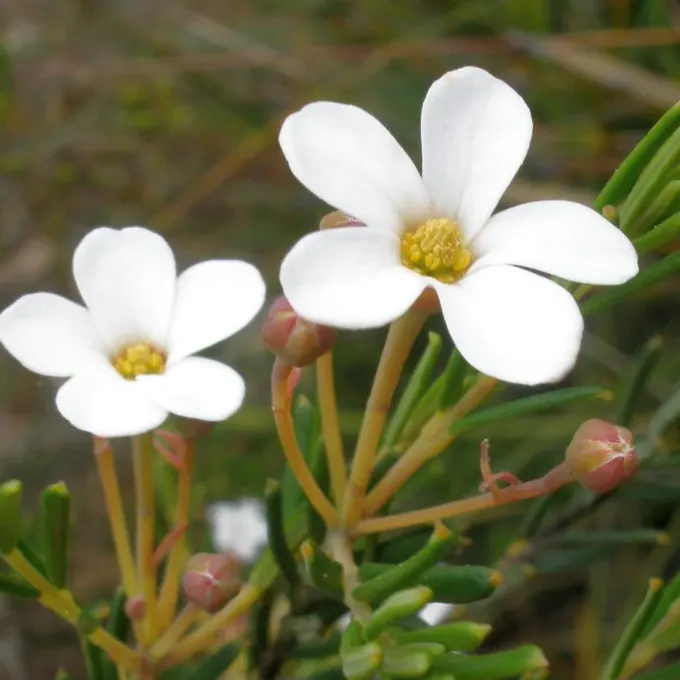
Description
Growing requirements
Ricinocarpos cyanescens is a distinct shrub species belonging to the Euphorbiaceae family. It is native to the diverse landscapes of Australia, where it has evolved to thrive in nutrient-poor and challenging environmental conditions.
This crop requires exceptionally well-draining soils, typically preferring sandy or gravelly textures. Its physiological adaptations allow it to survive in regions with erratic rainfall, making it a hardy choice for specific xeriscaping environments.
Sunlight exposure is a critical requirement for the optimal growth of this species. It performs best in full sunlight, as shade often leads to leggy growth and increased vulnerability to pathogens due to poor air circulation.
Climate-wise, it prefers mild to warm conditions. While it is adapted to the Australian environment, it must be protected from extreme frost or prolonged periods of high humidity, which can be detrimental to the plant's health.
Agronomic management should be minimal, focusing primarily on site selection rather than intensive cultivation. Fertilization should be kept to a minimum, as the plant is naturally adapted to low-nutrient soils and can be sensitive to excessive nutrient loads.
Main diseases and pests
The most significant threat to Ricinocarpos cyanescens is the development of root rot. This condition is almost exclusively caused by poor drainage or excessive soil moisture, which suffocates the root system and encourages fungal proliferation.
Pest pressures include common sucking insects that may target the foliage during warm periods. Maintaining good garden hygiene and ensuring adequate spacing between individual plants significantly reduces the risk of pest colonization and disease spread.