
Ricinocarpos tuberculatus
Ricinocarpos tuberculatus Müll. Arg.
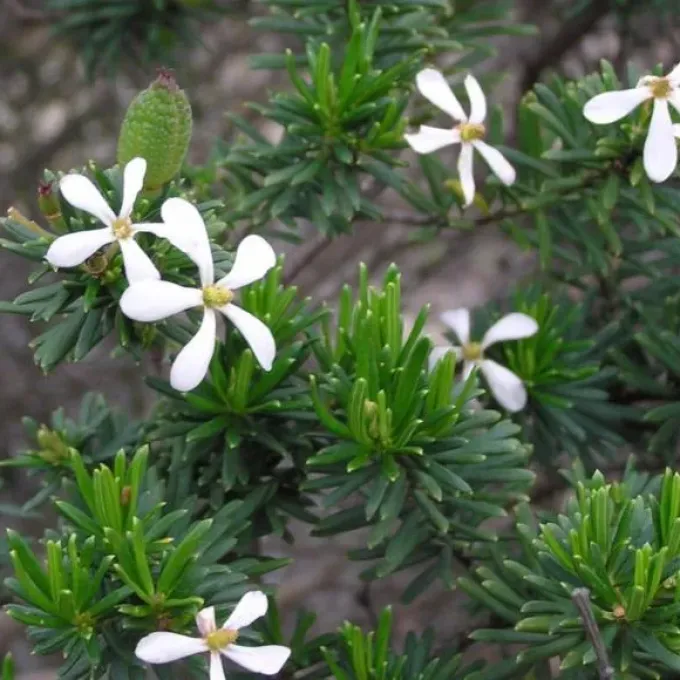
Description
Growing requirements
Ricinocarpos tuberculatus is a resilient evergreen shrub belonging to the Euphorbiaceae family. Native to the diverse landscapes of Australia, it thrives in well-drained, sandy environments typical of sclerophyllous vegetation zones.
The crop requires soil with excellent drainage properties. In an agricultural setting, sandy loams with a slightly acidic to neutral pH are preferred to ensure healthy root development and prevent the accumulation of excess moisture.
This species is well-adapted to high solar radiation levels, reflecting its evolutionary origin in exposed environments. It requires significant daily sunlight to maintain vigorous growth and produce characteristic foliage density.
Temperature management is critical for this species. It is considered a tender plant that requires protection from freezing temperatures. It performs best in regions where the thermal regime remains moderate throughout the year.
Agrotechnical maintenance involves periodic monitoring of water levels. While drought-tolerant once established, young plantings require consistent irrigation to develop a robust root system suitable for long-term survival.
Main diseases and pests
Root rot pathogens, particularly species like Phytophthora, pose the most significant threat to Ricinocarpos tuberculatus. These fungi proliferate rapidly in stagnant water, leading to total plant failure if drainage is inadequate.
Foliar pests, including spider mites, are common in drier climates. These pests feed on the underside of leaves, causing discoloration and eventual leaf drop, which impairs the plant's overall vitality.
Scale insects can establish colonies on the woody stems, where they are protected by their outer coverings. Controlling these pests requires targeted intervention with systemic insecticides that penetrate the waxy layers.
Maintaining proper spacing between individual shrubs is essential to facilitate air movement, which naturally mitigates the risk of fungal infections and reduces the humidity around the leaf canopy.
- Regular inspection of the root collar for signs of decay.
- Monitoring of leaf surfaces for webbing indicative of mites.
- Application of preventative fungicides during high-humidity seasons.