
Rock-loving spurge
Euphorbia petrophila
Description
Growing requirements
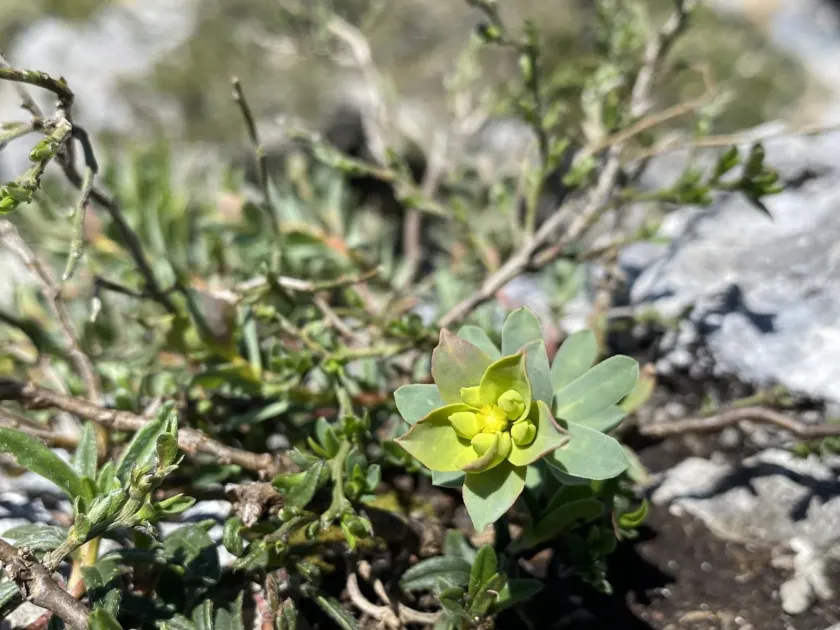
Rock-loving spurge (Euphorbia petrophila) is a perennial herbaceous plant belonging to the Euphorbiaceae family. Native to rocky outcrops and mountainous terrain, this species has evolved specific adaptations for survival in nutrient-poor, arid environments.
The primary cultivation requirement is an exceptionally well-draining substrate. Because the plant is native to stony areas, its root system is highly susceptible to waterlogging. Standard garden soil is usually too dense; therefore, mineral-based mixes with high gravel content are recommended.
Light exposure is critical for the development of Euphorbia petrophila. It thrives in full sun, which is necessary to maintain its characteristic structure and prevents the plant from becoming leggy or losing its vigor.
Temperature tolerance is a hallmark of this species, as it is adapted to the significant thermal fluctuations common in high-altitude or rocky habitats. However, during the growing season, it prefers stable, warm conditions with low atmospheric humidity.
Its primary use is in specialized ornamental horticulture. It is highly valued for xeriscaping, rock gardens, and slopes where soil conditions are too poor for common perennials, providing a unique aesthetic and low maintenance requirements.
Main diseases and pests
The most significant threat to rock-loving spurge is fungal disease triggered by excessive moisture. Root rot is the primary cause of mortality in cultivation, often resulting from poor drainage or overwatering during the dormant period.
Pests such as spider mites can infest the foliage, particularly in hot and dry weather. These mites feed on the sap, causing chlorosis and a decline in the plant's overall health if left unmanaged for extended periods of time.
In wet spring weather, mollusks such as slugs and snails may damage the succulent tissues. These wounds not only disfigure the plant but can also become entry points for secondary bacterial pathogens that lead to rapid tissue decay.
To prevent disease, it is essential to mimic natural arid conditions. Ensuring maximum air circulation and avoiding overhead watering helps keep the foliage dry, which significantly reduces the pressure from fungal spores and pathogens.
When pest control is necessary, select insecticides that are safe for succulent species. Always handle the plant with gloves, as the milky latex sap contains diterpenes that can cause severe skin irritation and contact dermatitis upon exposure.