
Purple spurge
Euphorbia peplis
Description
Growing requirements
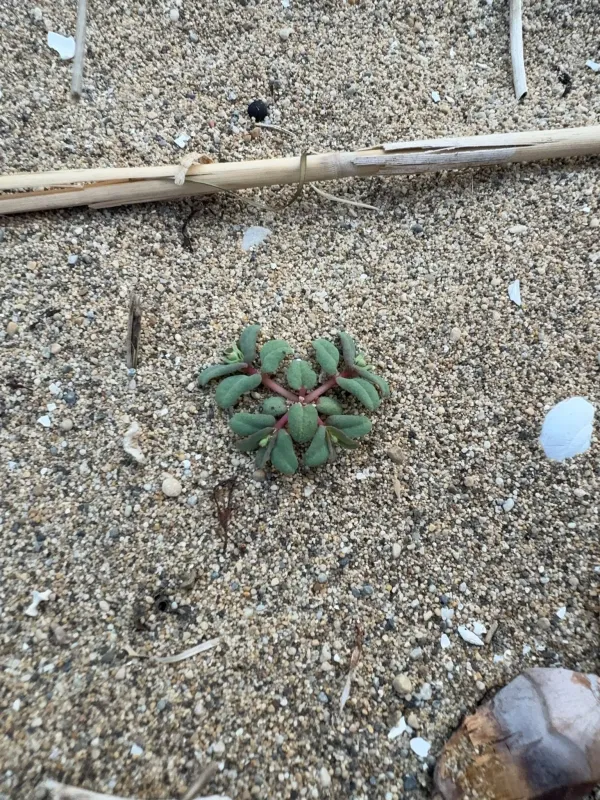
Purple spurge (Euphorbia peplis) is an annual herbaceous plant belonging to the Euphorbiaceae family. This species is strictly adapted to coastal environments, primarily growing on sandy and shingle beaches along the Mediterranean, Atlantic, and Black Sea coasts.
The plant is characterized by its prostrate, reddish-tinged stems and fleshy, glaucous leaves. These morphological features are critical adaptations for photosynthesis under high sunlight and survival in saline environments where fresh water is scarce.
Purple spurge is a classic psammophyte, which means it thrives in sandy substrates. It requires high solar irradiance and well-drained, porous soils. It is completely unsuited for cultivation in standard agricultural systems due to its highly specialized ecological niche.
The reproduction of this plant relies on seed dispersal via water currents along the shore, which allows the species to colonize new patches of sand dunes. Its seeds are buoyant and can withstand prolonged exposure to salt water without losing viability.
In modern agronomy and environmental science, Euphorbia peplis is recognized as a key indicator of pristine or semi-pristine coastal ecosystems. It provides stabilization for loose sands, preventing wind erosion in the immediate vicinity of the shoreline.
Main diseases and pests
The species faces no significant threats from traditional agricultural pests or crop diseases. Its survival is primarily limited by habitat fragmentation, beach cleaning activities, and the encroachment of urban development onto sand dune ecosystems.