
Ricinocarpos
Ricinocarpos
Ricinocarpos is a genus of flowering plants within the Euphorbiaceae family. Native primarily to Australia, these shrubs have evolved to thrive in environments ranging from coastal heaths to dry scrublands.
What the section contains


Ricinocarpos
The plant requires well-drained, nutrient-poor soil. In a cultivation setting, it is essential to ensure that the potting medium mimics natural conditions, preventing any waterlogging that could lead to root rot.
Full sun exposure is vital for the health of Ricinocarpos. When grown in non-native climates, it requires greenhouse conditions with high light intensity to promote flowering and maintain vigorous growth.
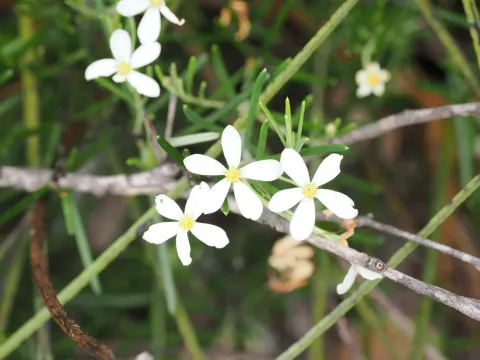
Botanically, these shrubs are characterized by leathery, narrow leaves and distinct star-shaped flowers. The structure of the plant makes it suitable for specific landscapes, although its agricultural utility is primarily ornamental.
Maintenance involves pruning the tips of the branches after flowering to keep the plant dense and bushy. Proper air circulation is also critical to prevent moisture buildup within the foliage canopy.
Root rot is the most significant threat to Ricinocarpos. This is almost always caused by improper irrigation techniques or soils that do not allow for rapid water drainage.
Common pests include spider mites and mealybugs. These insects can quickly overwhelm the plant in indoor conditions, especially if the air humidity is kept too low for prolonged periods.
Chemical control must be applied carefully. Using systemic pesticides is recommended for mealybugs, while contact acaricides are effective against spider mites if caught early enough.
Fungal leaf spot diseases may occur during humid, overcast weather. Improving ventilation and keeping the foliage dry are the most effective non-chemical preventative measures available.
Nutritional deficiencies should be addressed using specialized fertilizers for woody plants. Excessive nitrogen can lead to soft, susceptible growth, so a balanced NPK ratio is preferred.