
Ricinocarpos
Ricinocarpos hybrids
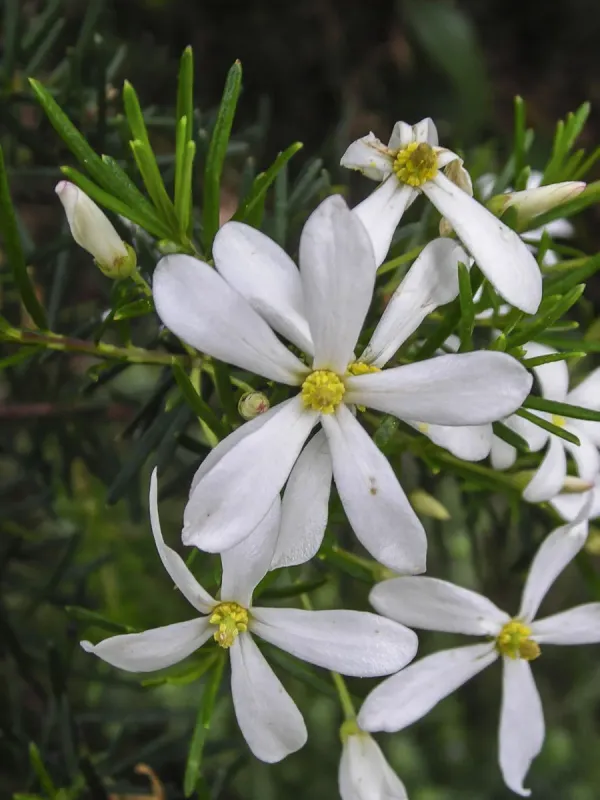
Description
Sowing dates
Propagation of Ricinocarpos is typically achieved through seed sowing or stem cuttings. Sowing should be carried out in early spring to provide sufficient light duration and warmth for optimal root system establishment.
Seed treatment is recommended, as mechanical scarification helps overcome the dormancy associated with the hard seed coat. This increases overall germination rates and ensures more uniform seedling emergence.
Stem cuttings are best taken in late summer, utilizing semi-hardwood material. These cuttings should be planted in a well-draining, sandy-peat substrate to prevent moisture accumulation during the rooting process.
A stable temperature regime between 20-25 degrees Celsius is essential for both germination and successful rooting of cuttings. Sudden temperature fluctuations can severely inhibit the metabolic processes of the young plants.
Young plants require careful handling during transplanting. The root system is delicate, and container-grown plants should only be shifted into larger pots when the roots have fully colonized the current substrate.
Growing requirements
As a member of the Euphorbiaceae family, Ricinocarpos is native to Australia, where it thrives in well-drained, sandy soils. Understanding its native ecology is critical for successful cultivation in non-native environments.
The plant is highly photophilic and requires full sun exposure to maintain its form and promote flowering. Shaded locations are generally unsuitable as they lead to etiolation and increased susceptibility to fungal diseases.
Soil quality must be prioritize, focusing on excellent aeration and drainage. Heavy, compact soils that retain moisture will inevitably lead to root rot, which is the most common cause of failure in this species.
Regarding climate, the plant prefers temperate conditions with low atmospheric humidity. Excessive humidity combined with high temperatures creates a hostile environment that encourages the proliferation of pathogens.
Irrigation must be managed strictly; the substrate surface should be allowed to dry completely between watering sessions. During winter months or dormant periods, water supply should be kept to a bare minimum.
Main diseases and pests
The primary threats to Ricinocarpos are root diseases, specifically those caused by water-mold pathogens like Phytophthora. These are almost exclusively associated with improper watering practices and poor soil drainage.
Pest pressures include spider mites and mealybugs, which are particularly problematic in greenhouse environments with poor ventilation. These pests target the sap of the plant, weakening its overall vigor.
Preventative maintenance includes keeping the growing area clean and ensuring optimal spacing between plants to facilitate airflow. Air movement is the best natural defense against many foliage diseases.
If chemical interventions are necessary, systemic insecticides may be used for pests, while specialized fungicides are required for soil-borne pathogens. Always ensure the product is compatible with members of the Euphorbiaceae family.
Regular monitoring of the leaf underside and the base of the stem allows for early detection of potential outbreaks, enabling the agronomist to act before the infection spreads to the entire crop.