
Ricinocarpos bowmanii
Ricinocarpos bowmannii
Description
Growing requirements
Ricinocarpos bowmanii is a distinct species belonging to the Euphorbiaceae family, widely recognized for its adaptation to arid and semi-arid environments of Australia. As an evergreen shrub, it demonstrates significant drought tolerance through physiological specialization.
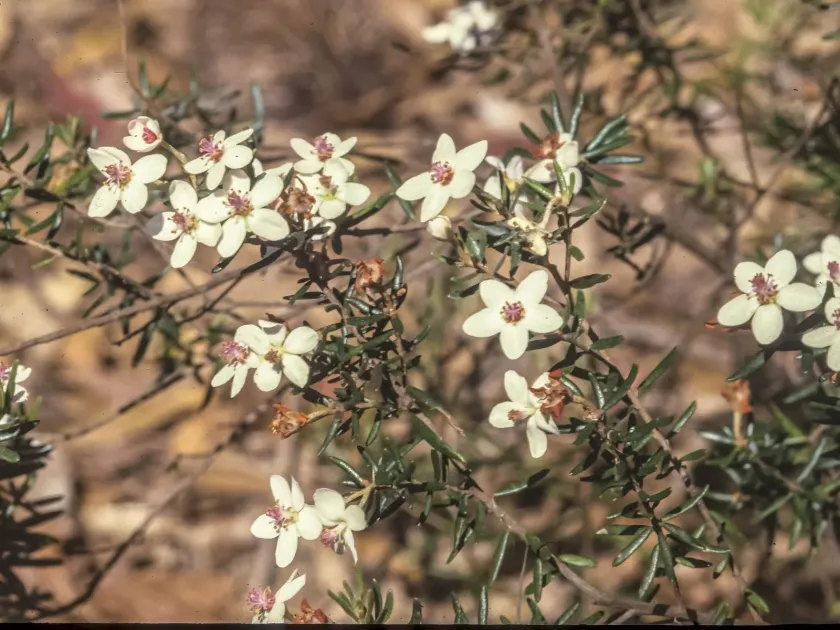
The botanical structure of the plant features narrow, linear leaves often with a dense indumentum on the underside to reduce transpiration. During the blooming season, the shrub produces small, white or pinkish flowers that create a visually striking contrast against the dark foliage.
Successful cultivation requires soil that mimics the plant's native habitat: well-drained, nutrient-poor, sandy, or stony substrates. Drainage is the most critical factor, as stagnant water is fatal to the root system, often leading to rapid decline.
Environmental conditions should prioritize full sun exposure to maintain the plant's compactness and promote flowering. It thrives in regions with warm, stable temperatures and is intolerant to severe frosts, which can cause severe damage to the vascular system of the stems.
In terms of horticulture, this species is primarily valued for xeriscaping and ornamental gardens where water conservation is prioritized. Maintenance remains minimal, focusing mainly on pruning to maintain shape and ensuring that fertilization is kept to an absolute minimum.