
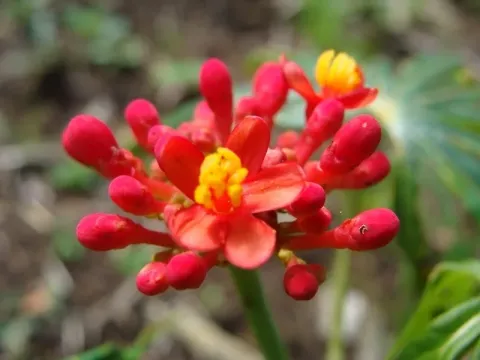
Coral plant
Jatropha multifida
Jatropha multifida, commonly known as the coral plant, is a perennial shrub belonging to the Euphorbiaceae family. It is indigenous to the tropical regions of the Americas and is widely appreciated for its unique, deeply lobed foliage.
What the section contains
Coral plant
This species requires a warm climate to thrive, as it is frost-tender and cannot survive in regions with cold winters. Ideally, temperatures should remain consistently above 15 degrees Celsius throughout the year.
Soil requirements for the coral plant include excellent drainage and high organic content. It thrives in well-aerated potting mixes or sandy-loam soils that allow roots to breathe and prevent waterlogging.
Abundant sunlight is a critical growth factor for this plant. While it can tolerate partial shade, full sun exposure encourages more frequent blooming and maintains the compact shape of the shrub.
The plant is primarily cultivated for ornamental purposes in botanical gardens and private collections. Its striking red flower clusters make it a popular specimen for tropical landscape designs.
Common pests that affect Jatropha multifida include spider mites and mealybugs, which are often found on the undersides of leaves.
Root rot is the most significant disease, usually caused by overwatering or poor soil structure. Proper irrigation management is essential to prevent this issue.
The plant sap is considered poisonous and can cause skin irritation, necessitating the use of protective gloves during pruning or propagation activities.
Fungal leaf spots may occur in environments with high humidity and poor air circulation, requiring improved ventilation in the growing area.
Monitoring for pest activity is crucial during the active growing season, as infestations can weaken the plant's structural integrity and aesthetic value.