
Costa Rican butterfly vine
Dalechampia dioscoreifolia
Description
Growing requirements
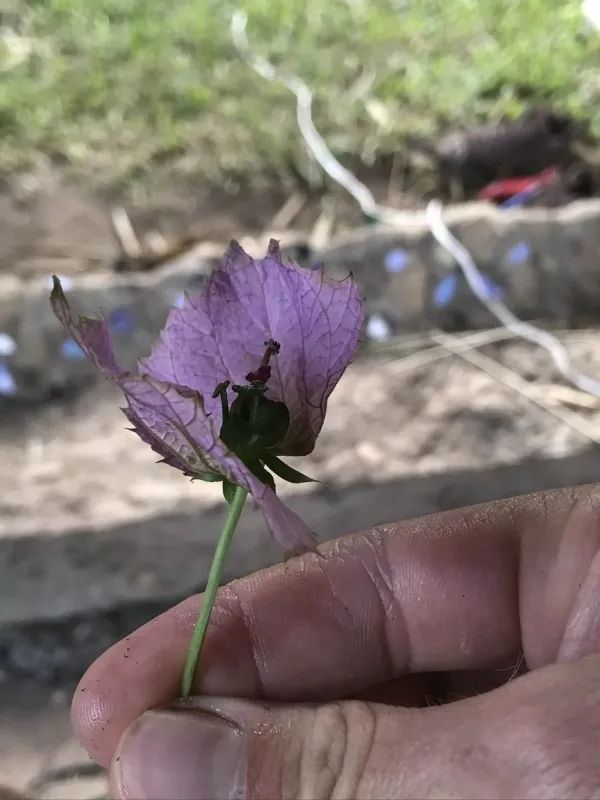
Dalechampia dioscoreifolia, commonly known as the Costa Rican butterfly vine, is a perennial climbing plant belonging to the Euphorbiaceae family. Native to the tropical rainforests of Central America, it is highly valued for its striking, butterfly-shaped bracts.
The plant grows as a vigorous vine, which requires sturdy supports such as trellises or wires to climb. Its heart-shaped leaves provide a dense green backdrop, making it an excellent choice for vertical gardening in greenhouses or conservatories with ample space.
Temperature requirements are strict, as this tropical plant thrives only in warm environments. It performs best in temperatures ranging from 20°C to 28°C and should be protected from any drafts or sudden temperature drops, which can lead to leaf yellowing and drop.
Regarding light, it requires bright, filtered sunlight to produce its signature vibrant bracts. In low-light conditions, the vine will become leggy and fail to bloom, while excessive direct light can scorch the foliage, causing brown necrotic spots.
The substrate must be rich in organic matter, slightly acidic, and well-draining. Periodic fertilization during the growing season with a balanced liquid fertilizer is recommended to support the rapid growth rate and the high energy demand required for continuous flowering.
Main diseases and pests
Spider mites are the most frequent pest in indoor environments, especially when air humidity is low. These pests colonize the undersides of leaves, resulting in stippling and eventual loss of the foliage if left untreated.
Mealybugs can also infest the stems and leaf axils, leaving behind sticky honeydew that may attract sooty mold. Regular monitoring and physical removal of these pests are essential to keep the plant in good health.
Root rot is the primary physiological disorder caused by overwatering. It is vital to ensure that the potting medium remains moist but never waterlogged, as stagnant water deprives the roots of oxygen, leading to rapid decay.
Fungal infections, such as leaf spot, may occur in poorly ventilated areas. Maintaining adequate spacing between plants and ensuring good airflow are critical cultural practices to mitigate the risk of pathogen outbreaks.
- Monitor for mites regularly.
- Maintain consistent humidity levels.
- Ensure excellent drainage.
- Remove any dead or yellowing foliage immediately.
- Apply systemic insecticides only when necessary.