
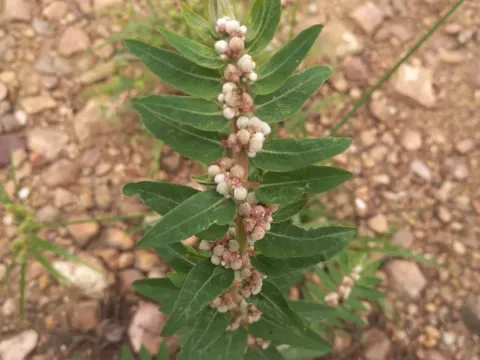
Convolvulus spurge
Euphorbia convolvuloides
Convolvulus spurge (Euphorbia convolvuloides) is an annual herbaceous plant belonging to the Euphorbiaceae family. In an agricultural context, it is predominantly recognized as a weed that interferes with crop development and nutrient uptake.
What the section contains
Convolvulus spurge
The plant originates from arid and semi-arid regions, particularly across Africa. It is highly adapted to tropical climates and thrives in poor, sandy soils where competition from other vegetation is significantly minimized due to environmental stress.
The botanical structure of this species includes thin, often trailing or climbing stems and milky latex which contains toxic alkaloids. This sap serves as a defense mechanism, making the plant unpalatable and often poisonous to grazing livestock.
Equipped with a deep taproot system, the plant is remarkably drought-tolerant. This root morphology allows it to access water reserves far below the surface, enabling it to survive under conditions that would inhibit the growth of standard crops.
It prefers high levels of solar radiation and does not tolerate significant shading. Consequently, its presence is most pronounced in sparse crop stands or in areas where soil management practices have been neglected or are insufficient.
This species serves as an alternative host for various viral and fungal pathogens. Insects can easily transmit these diseases from Euphorbia convolvuloides to more vulnerable cultivated plants, leading to widespread crop damage.
Livestock safety is a primary concern, as the toxic latex present in the tissue can contaminate fodder if the weed is harvested along with forage crops, posing health risks to cattle, sheep, and other herbivores.
Agricultural pests, such as certain aphids and mites, frequently colonize this spurge species. Once established, these pest populations can quickly transition to surrounding crops, causing significant yield losses through sap depletion.
Managing this weed requires a strategic approach, combining mechanical cultivation, such as deep plowing to sever the taproot, and the rotation of crops to prevent the establishment of dense, permanent patches of the weed.
Effective chemical control involves the use of systemic herbicides applied during the plant's active growth stage. However, due to its resilience, repeated applications may be necessary to ensure long-term eradication from the field.