
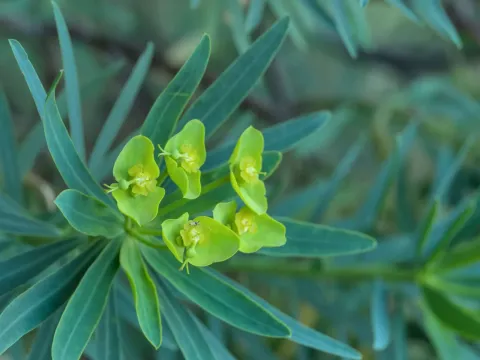
Tree Spurge
Euphorbia dendroides
Tree Spurge (Euphorbia dendroides) is a perennial shrub belonging to the Euphorbiaceae family. It is known for its architectural, hemispherical shape and its unique deciduous nature during hot Mediterranean summers.
What the section contains
Tree Spurge
Originating from the Mediterranean basin, this species is perfectly adapted to arid, rocky slopes. It thrives in climates with mild, wet winters and long, dry, hot summer periods, which are essential for its biological cycle.
The plant requires full sun exposure and excellent drainage to flourish. It is highly intolerant of waterlogged soil, which leads to root rot and systemic plant failure within a short time frame.
In terms of soil, it prefers poor, rocky, or calcareous substrates with neutral to alkaline pH levels. It is highly valued for its ability to withstand maritime conditions, including strong winds and high salinity levels.
Its primary agricultural and landscape use is in xeriscaping and environmental restoration projects. Due to its sap's toxicity, it is rarely browsed by livestock, making it a reliable candidate for soil stabilization on disturbed terrain.
The most significant threat to Tree Spurge is fungal root decay caused by poor drainage. It is critical to allow the root zone to dry out completely between irrigation cycles to prevent moisture-related pathogen colonization.
Pests such as aphids and spider mites can occasionally affect the foliage, particularly when the plant is under stress from improper environmental conditions or poor airflow in sheltered settings.
Powdery mildew may occur if the plant is grown in areas with high humidity and insufficient ventilation. Proper plant spacing is essential to ensure adequate air movement through the dense foliage.
The milky sap (latex) is irritating to skin and eyes. Care must be taken during pruning or maintenance tasks. Using protective gloves is standard practice to avoid inflammatory contact dermatitis.
For chemical control of potential fungal infections, systemic fungicides may be used if environmental management fails. However, focusing on cultural practices—such as proper placement and watering—remains the primary line of defense.