
Toothed spurge
Euphorbia dentata
Description
Growing requirements
Toothed spurge (Euphorbia dentata) is an annual herbaceous plant belonging to the Euphorbiaceae family. In agronomic practice, it is widely recognized as a problematic weed that can significantly impact field crop production.
Native to North America, this species has successfully colonized various regions globally. It is particularly adept at invading disturbed habitats, including row crop fields and industrial landscapes.
The plant thrives in fertile, well-drained soils and exhibits remarkable environmental adaptability. Its ability to tolerate varying soil moisture levels makes it a formidable competitor against essential food crops.
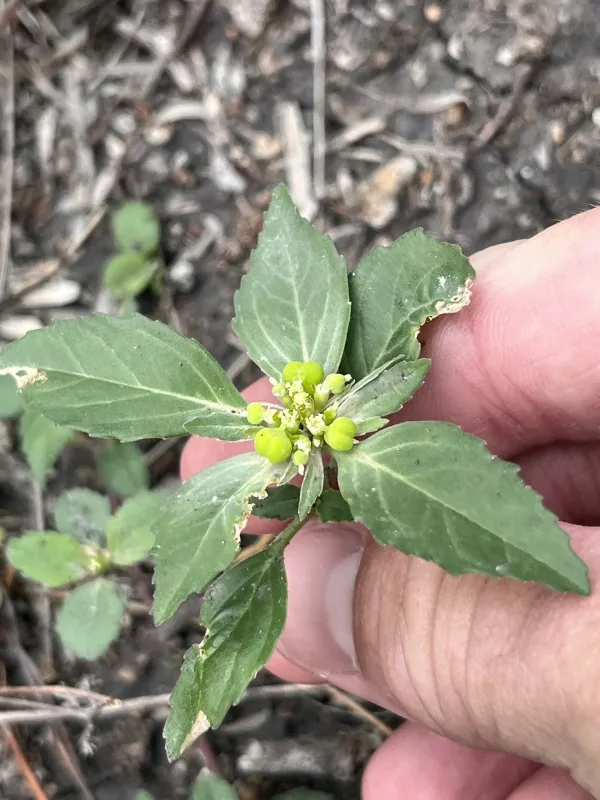
Morphologically, toothed spurge features an erect stem and distinctively dentate (toothed) leaves. Like other spurges, it contains a milky white latex sap that is irritating to the skin and toxic if ingested by livestock.
Biological success of the species is attributed to its high seed output and long-term seed bank viability, which allows it to reappear even after years of active management efforts.
Main diseases and pests
As a significant agricultural weed, toothed spurge competes aggressively with crops like soybean, corn, and sunflower for sunlight, water, and soil nutrients, leading to measurable reductions in yields.
Management strategies focus on a combination of cultural practices, such as crop rotation and timely cultivation, to disrupt the weed's life cycle before it can produce viable seeds.
Chemical control remains a primary tool; however, the emergence of herbicide-resistant biotypes is a growing concern, necessitating the use of diverse modes of action and integrated programs.
Beyond direct competition, toothed spurge can serve as an alternative host for various plant pathogens and insect pests that subsequently migrate to commercial crops, increasing the overall disease pressure.
Farmers are advised to prioritize equipment sanitation and certified seed usage to prevent the further spread of this invasive species across agricultural lands and vulnerable ecosystems.