
Tropical smoke bush
Euphorbia cotinifolia
Description
Growing requirements
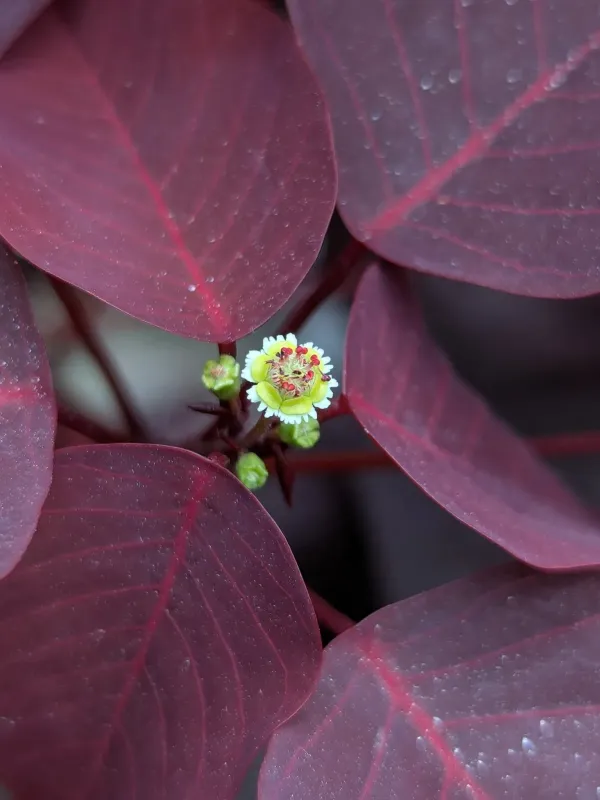
The tropical smoke bush (Euphorbia cotinifolia) is an eye-catching perennial shrub belonging to the Euphorbiaceae family. Originally native to Mexico and parts of South America, it is highly valued for its striking dark red to purple foliage that adds a dramatic contrast to any collection.
This plant thrives in bright, direct sunlight, which is essential for maintaining its vibrant leaf color. Without sufficient light exposure, the plant will lose its deep burgundy tones and become sparse, with stems stretching towards the nearest light source in a process known as etiolation.
Soil requirements focus on excellent drainage to mimic the plant's natural habitat. A high-quality potting mix enriched with perlite or coarse sand is recommended to ensure that excess water can escape quickly, preventing waterlogging of the sensitive root system.
Maintaining a warm environment is critical for this species. It prefers temperatures between 20°C and 25°C and cannot tolerate frost or chilly drafts. Consistent warmth helps promote steady growth and ensures the plant remains healthy throughout the active growing season.
Safety is a priority when handling this specimen. Like many members of its genus, it contains a milky sap that is highly irritating to the skin and eyes. Always wear gloves during pruning or repotting, and keep the plant out of reach of children and pets to prevent accidental ingestion.
Main diseases and pests
Spider mites are the most common pest challenge for this plant, especially in indoor environments with low humidity. These microscopic insects feed on the underside of leaves, causing them to lose their color, curl, and eventually fall off if left untreated.
Mealybugs are another frequent threat, often appearing as white, cotton-like clusters in the leaf axils or along the stems. They extract plant sap and secrete a sticky substance that can attract secondary fungal infections, such as sooty mold, on the foliage surface.
Scale insects can also infest the tropical smoke bush, attaching themselves firmly to stems and leaves. Their protective armor makes them resistant to standard contact insecticides, requiring systematic treatment or careful mechanical removal to manage the infestation effectively.
Root rot is the most significant disease-related threat, usually caused by overwatering or poor soil drainage. When the roots remain in damp, cold conditions for too long, they lose their ability to absorb nutrients, leading to rapid yellowing and wilting of the plant.
Effective management involves regular monitoring and maintaining proper hygiene within the growing area. By ensuring adequate airflow and avoiding overly frequent watering, you can create an environment that minimizes the risk of both pest outbreaks and persistent fungal diseases.