
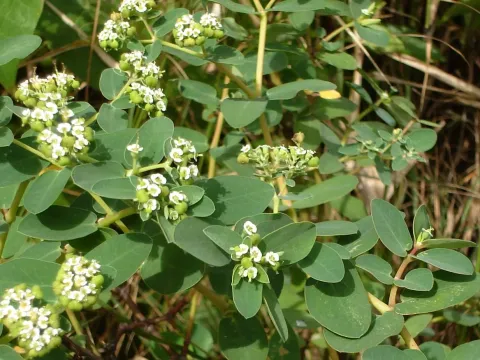
Chamisso's spurge
Euphorbia chamissonis
Chamisso's spurge (Euphorbia chamissonis) is a perennial herbaceous plant from the Euphorbiaceae family, which typically reproduces via seeds in its natural habitat. In temperate climates, sowing should be conducted in the spring once the soil temperature reaches 12–15 degrees Celsius.
What the section contains
Chamisso's spurge
Due to the low germination rate of freshly harvested seeds, it is recommended to stratify the seeds for one to two months before sowing. Seeds should be planted at a depth of no more than 1–2 centimeters to ensure successful emergence.
The optimal time for transplanting seedlings into the open field is late May, after the threat of frost has passed. The plant develops a robust root system, so it is crucial to maintain the soil ball's integrity during transplantation.
The planting density depends on the specific landscaping objectives, but generally, 30–40 centimeters of space should be left between plants to allow for the formation of a dense, healthy clump.
In regions with mild winters, dormant fall seeding is possible, allowing the seeds to undergo natural stratification and germinate vigorously with the arrival of the first spring warmth.
This species thrives in open, sunny locations, as shading significantly reduces the plant's ornamental value and structural density. It is a true xerophyte, perfectly adapted to environments with limited water availability.
The plant is not highly demanding regarding soil types; however, it performs best in light, sandy, or loamy soils with a neutral or slightly alkaline pH. Good drainage is essential, as waterlogging is detrimental to the roots.
During the active growing season, maintenance is minimal, requiring only occasional soil aeration and weed control in the immediate root zone.
Mineral fertilizers should be applied sparingly. Excess nitrogen can lead to etiolated stems and loss of the plant's characteristic compact habit. A single application of balanced fertilizer early in the season is usually sufficient.
Chamisso's spurge exhibits high winter hardiness; however, in regions with harsh winters and low snow cover, light mulching with organic materials is recommended for additional protection.
Root rot is the primary threat to this crop, typically triggered by poor drainage or excessive soil moisture. Proper site preparation and drainage are the most effective preventative measures.
Pests rarely infest this species due to the presence of toxic alkaloids in the milky latex. Occasionally, in particularly hot and dry summers, aphids may colonize the young, succulent tips of the stems.
Should pests be detected, the use of systemic insecticides is recommended. Maintaining proper plant spacing to ensure adequate air circulation remains the best preventive strategy against infestation.
Fungal diseases, such as powdery mildew, can occur under conditions of high atmospheric humidity and poor airflow. Treatment involves the use of copper-based fungicides.
Regular inspection of the plant clumps for necrotic spots or wilting is vital. Early identification allows for timely sanitary pruning of affected areas and the isolation of symptomatic plants.