
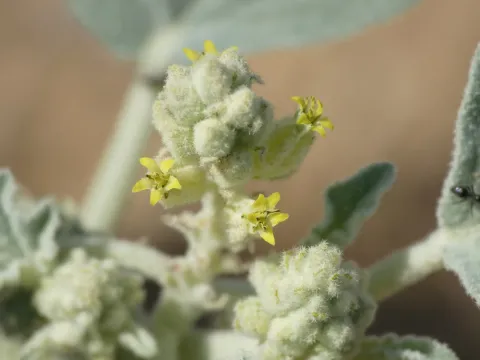
Chrozophora
Chrozophora
Chrozophora is a genus of herbaceous plants and shrubs belonging to the Euphorbiaceae family. In agricultural landscapes, these plants are often found in disturbed habitats or as invasive weeds competing with cultivated crops.
What the section contains

Chrozophora
Propagation occurs primarily through seeds, which exhibit strong dormancy mechanisms allowing them to persist in the soil for several years. This trait ensures consistent germination when environmental conditions become favorable.
Seedlings emerge during late spring when soil temperatures reach the required threshold. The plants develop a deep taproot early on, which provides a significant advantage for survival in unpredictable weather conditions.
The growth cycle involves an initial rosette stage, followed by rapid stem elongation and branching. The overall development rate is highly dependent on light availability and the absence of competition from denser plant cover.
In agronomy, managing Chrozophora is often necessary to prevent its spread in agricultural fields, as its efficient resource utilization makes it a robust competitor against commercial crops.
Chrozophora is a heliophilic plant that demands high levels of direct solar radiation. It thrives in open, unshaded environments, which is why it is often found in fields that have been cleared of dense vegetation.
The plant demonstrates remarkable soil adaptability. It can grow in various soil types, ranging from nutrient-poor rocky substrates to heavy clay or sandy soils, provided they are not waterlogged.
Drought tolerance is a signature trait of the genus. The presence of dense stellate hairs (trichomes) on the leaves significantly reduces transpiration, allowing the plant to remain active during hot, dry summer months.
It prefers neutral to slightly alkaline soil conditions and is less competitive in highly acidic environments. Adequate aeration is crucial for the root system, especially in heavier soil textures.
Optimal development occurs when moderate spring moisture is followed by intense heat, which promotes flowering and subsequent seed maturation, essential for the species' life cycle.
Like many members of the Euphorbiaceae family, Chrozophora can be affected by specific insect pests. Certain beetles and caterpillars specialized in consuming plants from this family may cause significant leaf damage.
Fungal diseases are a major threat, particularly during periods of high humidity or poor field drainage. Pathogens causing leaf spots and root rots can significantly reduce the vitality of the plant population.
Powdery mildew is a common issue that occurs when temperatures fluctuate and humidity levels are inconsistent. This condition affects the photosynthetic surface of the leaves, potentially stunting growth.
Viral infections transmitted by sap-sucking insects can lead to chlorosis and stunted development. These symptoms often weaken the plant, making it more susceptible to environmental stress and secondary pests.
Integrated pest management strategies, such as crop rotation and mechanical soil disturbance, are essential to minimize the presence of these pathogens and pests in areas where Chrozophora is prevalent.
Historically, Chrozophora has been highly valued as a source of natural dyes. The pigments found in the fruit and sap, particularly in species like Chrozophora tinctoria, were used to create deep blue and purple colorants for textiles.
Harvesting for dye extraction requires precise timing to ensure the highest concentration of pigments. Fruits are typically collected when they reach full maturity, often just before they fully dry out on the stalk.
Post-harvest handling is critical, as the pigments are highly sensitive to oxidation and light exposure. The collected material must be dried in controlled, shaded conditions to preserve the stability of the active components.
While large-scale commercial production has declined with the advent of synthetic dyes, Chrozophora remains of interest for heritage restoration projects and studies into sustainable bio-based pigment sources.
Current agricultural interest is primarily academic or focused on environmental management, as the plant is not widely cultivated as a primary food or industrial crop in modern global agriculture.