
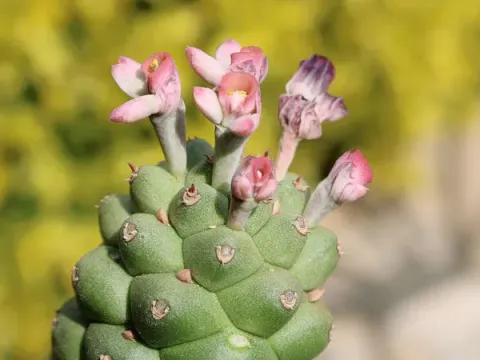
Hidden Spurge
Euphorbia celata
The hidden spurge (Euphorbia celata) is a perennial plant belonging to the Euphorbiaceae family, recognized for its exceptional resilience in arid and semi-arid environments. It serves as a botanical subject of interest for its unique physiological adaptations to heat.
What the section contains
Hidden Spurge
In terms of soil requirements, Euphorbia celata thrives in well-drained, sandy, or rocky soil profiles. The plant is highly sensitive to waterlogging, which often results in root rot due to the anaerobic conditions created in saturated soil environments.
Climate adaptation is a hallmark of this species, as it maintains metabolic activity even in high-temperature conditions. It requires significant solar radiation and low relative humidity, which are essential for its healthy development and chemical profile stability.
Agrotechnical management involves maintaining a clean seedbed during the establishment phase, as the species shows slow initial growth rates. Proper row spacing is required to ensure optimal airflow and light interception across the field.
Economically, the cultivation of this species focuses on the extraction of high-value compounds found in its milky latex. These biochemicals are researched for use in sustainable chemical manufacturing and specialized industrial processes.
The primary pests affecting Euphorbia celata are spider mites and various aphid species that thrive in the arid climates preferred by the crop. These pests can significantly reduce biomass yield.
Fungal diseases, specifically those involving root pathogens such as Fusarium, are the main threats. These occur mainly when soil moisture levels exceed the plant's tolerance threshold during the dormancy period.
Effective management includes implementing a strict irrigation protocol and ensuring that the field topography allows for natural drainage of excess rainwater.
Biological controls can be implemented to manage pest populations, though systemic insecticides remain a standard approach for severe infestations in commercial operations.
Crop rotation strategies should be strictly adhered to, avoiding planting on soil previously used by other members of the Euphorbiaceae family to prevent soil-borne pathogen buildup.