
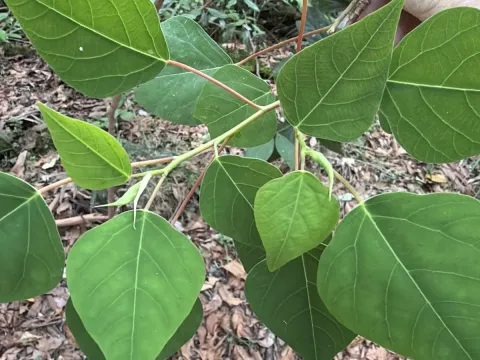
Homalanthus
Homalanthus
Homalanthus is a genus of evergreen shrubs and small trees belonging to the Euphorbiaceae family. Native to tropical regions of Asia, Australia, and the Pacific Islands, these plants are highly valued for their ornamental foliage and natural elegant structure.
What the section contains

Homalanthus
In terms of cultivation, Homalanthus requires a warm and humid environment, reflecting its tropical origins. It thrives best in well-lit areas with bright, indirect sunlight, as direct exposure can easily scorch the leaves and cause premature senescence.
The soil requirements involve a rich, well-draining potting mix that retains moisture without becoming waterlogged. A balance of peat moss, perlite, and organic compost is recommended to provide both nutrients and adequate aeration for the root system.
Water management is critical for the health of the plant. During the active growing season, consistent moisture is necessary, but the soil should be allowed to dry slightly at the top layer between watering cycles to prevent root rot.
Like many members of the Euphorbiaceae family, Homalanthus produces a milky latex sap. This substance acts as a natural defense mechanism against herbivores but can be irritating to human skin, necessitating the use of protective gear during pruning and propagation.
The most common pests affecting this plant in indoor or greenhouse settings are spider mites, scale insects, and mealybugs. These pests thrive in dry environments, so maintaining proper ambient humidity is a key preventative measure.
Fungal diseases related to overwatering represent the primary threat to the plant's health. Improving air circulation around the canopy and ensuring the pot has sufficient drainage holes are essential steps to avoid infection and root decay.