
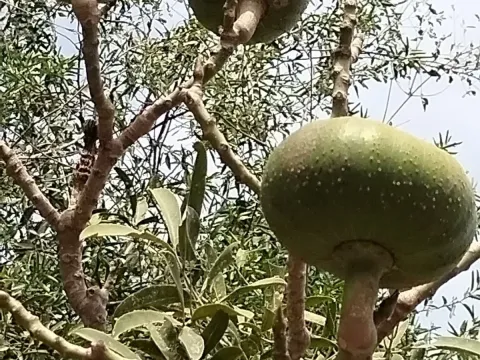
Hura polyandra
Hura polyandra
Hura polyandra is a prominent member of the Euphorbiaceae family, commonly recognized as a large deciduous tree. Native to the dry tropical forests of Central America, this species has evolved to thrive in regions where distinct seasonal variations dictate its growth cycle.
What the section contains
Hura polyandra
Successful cultivation requires a warm tropical climate characterized by significant heat and a marked dry season. The species is highly adapted to drought-prone environments, making it a robust candidate for restoration projects in arid tropical landscapes.
The ideal soil profile for this crop consists of deep, well-drained alluvial types. It is crucial to maintain proper aeration in the root zone, as the tree exhibits high sensitivity to waterlogging, which can severely inhibit development and increase susceptibility to decay.
Optimal growth is achieved when the plants are provided with full sun exposure. Sunlight intensity is the primary driver of photosynthesis for this species, and shading should be strictly avoided to ensure uniform trunk development and balanced crown structure in plantation settings.
Agronomic management involves regular observation and appropriate pruning techniques. As the tree produces a caustic sap that can cause severe irritation, specialized equipment and safety protocols are mandatory for all field operators involved in maintenance or harvesting activities.
The primary economic value of Hura polyandra lies in its timber, which is appreciated for its lightweight and workable texture. This wood is frequently utilized in the manufacturing of furniture, cabinetry, and interior construction components where high strength is not the primary requirement.
Industrial applications also include the production of lightweight plywood and paper pulp. While the harvest process requires care due to the physical properties of the tree, efficient silvicultural practices ensure a sustainable yield of raw material for diverse wood-based industries.