
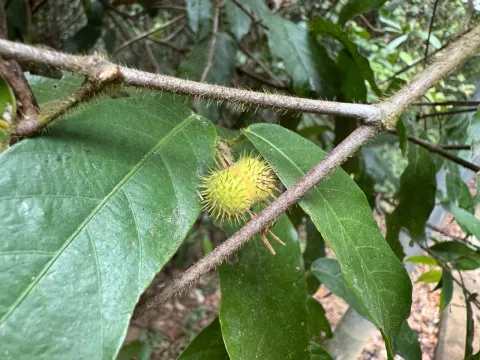
Hancea
Hancea
The genus Hancea belongs to the Euphorbiaceae family, comprising several species native to tropical regions, primarily within Southeast Asia.
What the section contains

Hancea
Seeds are typically sown in a well-draining, nutrient-rich substrate, such as a mix of peat, bark, and perlite, to ensure proper root development.
Timing is critical, and sowing is best performed in the early spring months to leverage increasing daylight hours and consistent warmth.
Seeds require high humidity and should be kept under cover or in a greenhouse environment where temperatures remain between 22 and 26 degrees Celsius.
Germination can be slow; therefore, it is vital to maintain consistent moisture without saturating the soil to prevent fungal growth on the seeds.
Hancea requires bright, filtered light as its foliage can be sensitive to intense, direct tropical sunlight, which may lead to scorching.
The plants thrive in acidic to neutral soil environments that are highly porous to allow for excellent drainage and oxygen circulation.
Temperature consistency is a major factor, as the species generally struggle to tolerate temperatures below 15 degrees Celsius for extended periods.
Regular irrigation is necessary to keep the root ball moist, though the plant requires a reduction in watering during the dormant winter period.
Maintaining high ambient humidity is essential for the healthy development of the plant structure, often requiring misting or specialized humidification systems.
Fungal pathogens are the most significant threat to Hancea, particularly root rot, which often occurs due to overwatering or poor soil drainage.
Leaf spot diseases can also occur in high-humidity, low-airflow environments, necessitating regular monitoring and improved ventilation strategies.
Common pests include spider mites and mealybugs, both of which thrive in the warm, enclosed environments where these plants are typically kept.
Integrated pest management, including the use of neem oil or targeted insecticidal soaps, is effective in keeping pest populations under control.
Proper sanitation, including the removal of dead or dying leaves, helps significantly in reducing the risk of pest outbreaks and disease spread throughout the crop.