
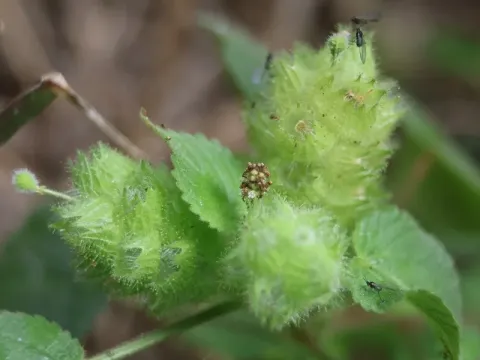
Havana copperleaf
Acalypha havanensis
Havana copperleaf (Acalypha havanensis) is a woody shrub belonging to the Euphorbiaceae family. It is native to the tropical regions of the Caribbean, particularly Cuba, where it thrives in warm and humid environments.
What the section contains
Havana copperleaf
As a tropical plant, it demands consistent warmth. It is typically grown outdoors in tropical climates or managed as a container plant in temperate regions, requiring protection from any frost.
The ideal soil for Acalypha havanensis is well-draining, nutrient-rich, and slightly acidic. A mix of peat, perlite, and organic compost is usually recommended to ensure healthy root development.
It requires bright, indirect sunlight to maintain its vibrant foliage. While it can tolerate partial shade, insufficient light will result in leggy stems and a loss of color intensity.
Regular maintenance includes pruning to shape the canopy and encourage dense branching. Watering should be consistent, ensuring the soil remains moist but never waterlogged to prevent root stress.
Common pests affecting this species include spider mites, aphids, and mealybugs, which thrive in environments where humidity levels are improperly managed.
Root rot caused by Phytophthora or Pythium fungi is a frequent threat when the soil is kept too wet for prolonged periods without adequate drainage.
Leaf spot diseases, often caused by fungi or bacteria, may appear as irregular patches on the foliage. Removing affected leaves and improving air circulation is crucial for control.
Integrated pest management strategies should focus on monitoring the undersides of leaves and applying biological controls or horticultural soaps when populations are low.
Strict sanitation practices, such as removing fallen debris from the soil surface, are essential to prevent the buildup of spores and insects in the plant's environment.