
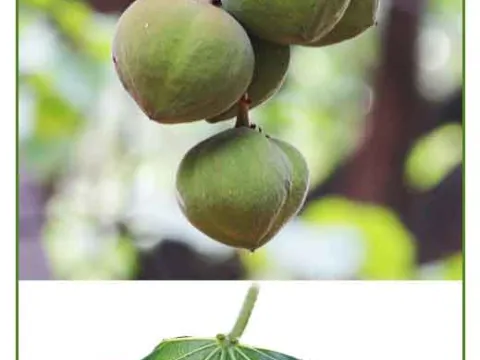
Aleurites trisperma
Aleurites trisperma
Aleurites trisperma, commonly known as the Philippine tung, is an evergreen tree belonging to the Euphorbiaceae family. Originating from the Philippines, this species has been introduced to various tropical climates where conditions mirror its native habitat.
What the section contains
Aleurites trisperma
The tree thrives in tropical environments with high temperatures and consistent rainfall throughout the year. It is highly sensitive to frost and cold, making it unsuitable for cultivation in temperate zones without extreme protection.
Optimal soil conditions include fertile, well-drained loams. Aleurites trisperma cannot tolerate waterlogged soils, as poor drainage quickly leads to root rot and systemic health issues in the trees, eventually reducing their lifespan.
The tree is characterized by its wide canopy and large leaves, which require adequate spacing in commercial plantations to ensure sufficient sunlight penetration. Proper spatial planning is essential for maximizing yield and maintaining tree health.
The primary economic value of this crop lies in its seeds, which contain high-quality drying oils. These oils are prized in industrial applications, particularly for manufacturing high-grade paints, varnishes, and protective coatings for wood.
Aleurites trisperma generally begins to fruit within 3 to 5 years after planting. The yield per tree increases steadily as the canopy matures and the tree reaches its peak reproductive capacity in the plantation cycle.
Effective plantation management involves strategic pruning to stimulate branch development, which in turn increases the number of flowering sites per tree. This practice is crucial for sustainable, high-volume production in commercial settings.
The oil content in the seeds is influenced by nutrient availability and climatic consistency during the fruit-ripening stage. Fertilizer programs should focus on providing essential macronutrients that support both vegetative growth and oil accumulation.
Harvesting strategies typically involve collecting fallen fruits or manually picking mature fruits directly from the branches. Yields are improved by maintaining a healthy, balanced soil ecosystem that provides the tree with constant hydration.
In modern plantations, irrigation is used to mitigate the effects of short-term dry spells, ensuring the trees maintain their energy balance to produce high-quality oil consistently across successive harvesting seasons.
The most significant threats to Aleurites trisperma include various fungal infections, especially when humidity levels remain persistently high. Proper air circulation within the plantation is a key preventive measure against foliage pathogens.
Several types of wood-boring insects and leaf-eating pests can damage the tree's structures. Integrated pest management strategies are recommended, focusing on early detection and the use of targeted, environmentally sound control measures.
Root rot remains a major threat in poorly managed fields with inadequate drainage. If an infection is detected, affected trees must be isolated and removed to prevent the spread of soil-borne pathogens to healthy neighboring trees.
Regular monitoring of the trees is essential for maintaining a healthy orchard. Scouting for signs of defoliation or discoloration can help farmers address pest or nutrient issues before they cause significant yield losses.
Importing nursery stock requires strict adherence to quarantine protocols to prevent the introduction of foreign pests or diseases that could devastate the local population of these tropical trees.
Harvesting occurs when the fruit husks dry out and begin to split open naturally. This transition indicates that the internal seeds have attained the required maturity and oil content for industrial processing.
Manual collection is often preferred for maintaining seed quality, as it allows for the sorting of fruits at the point of harvest. This ensures that only high-quality, mature seeds are sent to the drying facilities.
Post-harvest processing involves drying the seeds to reach an optimal moisture content. This stabilization step is vital for preventing degradation of the fatty acids within the seeds, which are susceptible to oxidation.
Dehulling follows the drying process, where the hard exterior casing is removed. This mechanical or manual process results in clean kernels ready for pressing, ensuring the final oil product is free from husks or debris.
Storage of the processed kernels must be done in cool, dry conditions to preserve the integrity of the oil. Proper warehouse management prevents spoilage and ensures the product maintains its market value until transport.