
Ludlow's rhododendron
Rhododendron ludlowii
Description
Growing requirements
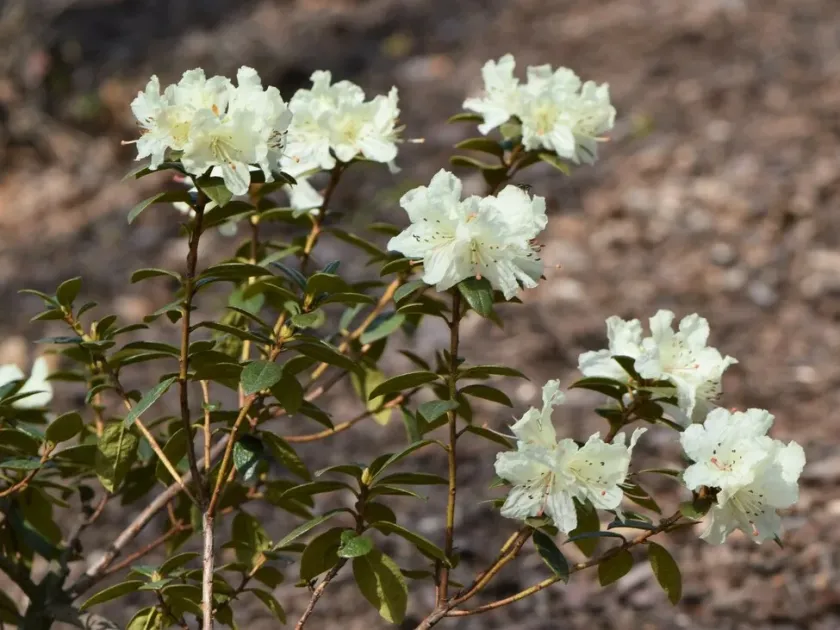
Rhododendron ludlowii is a compact, mat-forming shrub belonging to the Ericaceae family, highly prized by collectors for its distinctive yellow, bell-shaped flowers and miniature habit.
The species is native to the high-altitude rocky slopes of southeastern Tibet, which dictates its preference for cool conditions and excellent drainage typical of alpine environments.
For cultivation, it is essential to provide an acidic, humus-rich, and well-aerated soil medium, often achieved by incorporating pine bark, peat, and coarse grit into the planting pit.
The plant performs best in a position with partial shade, avoiding the intense heat of the afternoon sun that can easily scorch its delicate, evergreen foliage.
Consistent moisture is required throughout the growing season; however, it is critical to ensure that the roots are never left in waterlogged conditions, as this leads to rapid decay.
Main diseases and pests
The most significant threat to Rhododendron ludlowii is root rot caused by Phytophthora species, which often thrives in poorly drained soils or areas with poor air circulation.
Foliar pests such as rhododendron lace bugs can cause severe aesthetic damage by sucking sap from the underside of leaves, leading to yellow stippling and overall plant decline.
Nutrient deficiencies, particularly iron chlorosis, are common if the soil pH rises above the optimal range, resulting in pale yellow leaves with green veins.
Powdery mildew may occur in stagnant, humid conditions, necessitating the use of fungicides and the improvement of airflow around the canopy of the shrub.
Regular monitoring for early signs of infestation and maintaining a strict sanitation regime, including the removal of dead or decaying organic matter, is vital for long-term health.