
Litie Rhododendron
Rhododendron litiense
Description
Growing requirements
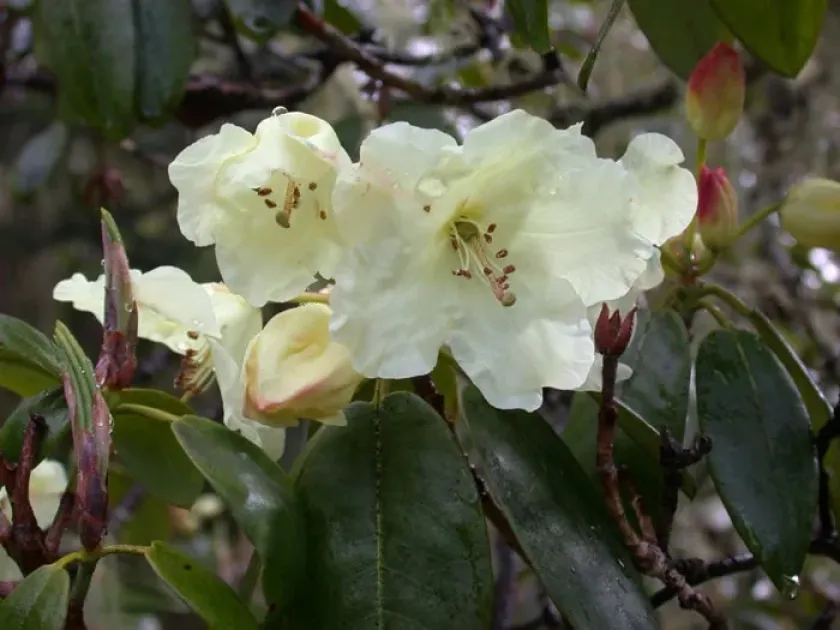
The Litie Rhododendron (Rhododendron litiense) is a sophisticated evergreen shrub belonging to the Ericaceae family. It is highly valued in horticulture for its compact habit and elegant bell-shaped flowers, which provide a distinct aesthetic appeal to shaded garden areas.
Native to the mountainous regions of Sichuan, China, this species thrives in environments characterized by high humidity and cool temperatures. It typically grows in high-altitude slopes where atmospheric moisture remains consistently high throughout the year.
The fundamental requirement for successful cultivation is an acidic soil medium, ideally with a pH level between 4.5 and 5.5. A mix of peat moss, pine bark, and coarse sand provides the necessary drainage and acidity to ensure the plant's long-term health and vitality.
Light management is crucial for the Litie Rhododendron; it prefers dappled shade rather than intense, direct sunlight. Exposure to harsh midday sun can lead to leaf scorching and physiological stress, which significantly impacts the shrub's ability to develop its characteristic foliage density.
Irrigation practices must prioritize consistency using soft, lime-free water. Keeping the root zone consistently moist but never waterlogged is the primary goal of the gardener, as stagnant water is detrimental to the fine root system of this species.
Main diseases and pests
Phytophthora root rot is the most common and devastating disease affecting this species. It is primarily caused by poor drainage and excessive watering, leading to the decay of root tissues and subsequent wilting of the foliage, which is often irreversible once symptoms appear.
Insect pests, particularly the rhododendron lace bug, are frequently encountered in garden settings. These insects pierce the leaf tissue to feed, causing a characteristic stippling or bronzing effect on the upper surface of the leaves, which ruins the visual appeal of the shrub.
To mitigate disease pressure, it is essential to ensure proper air circulation around the shrub. Dense planting should be avoided, and any dead or dying branches must be pruned away immediately to prevent the spread of fungal spores during humid periods.
The use of horticultural oils or systemic insecticides is recommended to control insect infestations early in the season. Monitoring the undersides of leaves during the spring is vital to detect the presence of nymphs before significant damage to the plant occurs.
Effective preventive care involves maintaining a layer of organic mulch around the plant base. This helps suppress soil-borne diseases while simultaneously moderating root zone temperatures and preserving the soil moisture levels required for optimal plant metabolism.