
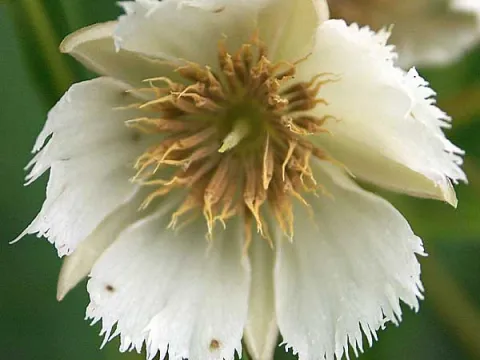
Elaeocarpus sphaericus
Elaeocarpus sphaericus
Elaeocarpus sphaericus, known as the Rudraksha tree, is an evergreen species belonging to the Elaeocarpaceae family. It is a large, broad-leaved tree that thrives in warm, humid tropical and subtropical environments.
What the section contains
Elaeocarpus sphaericus
The plant requires deep, fertile, and well-drained soils with a slightly acidic to neutral pH. It is highly sensitive to waterlogging, which necessitates careful site selection and the installation of drainage systems.
It prefers a tropical climate with temperatures typically ranging between 20°C and 30°C. High atmospheric humidity is essential, especially during the early stages of plant development.
Sunlight requirements are moderate to high; however, young plants need partial shade to prevent leaf scorch. As the trees mature, they become more tolerant of full sun exposure.
Agronomic practices include regular irrigation during dry spells and consistent mulching to retain soil moisture. Nutrient management through organic amendments is recommended to support continuous vegetative growth.
The primary agricultural output of this crop is the seed, commonly known as Rudraksha. These seeds are enclosed in a fleshy, blue-colored fruit (drupe) that matures over several months.
Trees typically reach reproductive maturity between the ages of 5 to 7 years. Once the fruits turn deep blue, they are harvested, usually by hand, to ensure the seeds inside remain undamaged.
After harvesting, the seeds undergo a process of cleaning and removal of the pulp. The remaining hard, ridged endocarp is then carefully dried under shade to maintain its natural quality and strength.
The seeds are extensively used in jewelry making, meditation beads, and various traditional craft applications. Their market value is often determined by the number of facets on the seed surface.
Quality control during drying is essential to prevent moisture accumulation and fungal growth. Proper sorting and grading of seeds based on size and structure are standard post-harvest procedures.
The main threat to the health of Elaeocarpus sphaericus is root rot caused by stagnant water in the soil. Maintaining proper soil structure and aeration is the most effective preventative measure.
Pests such as mealybugs and scale insects can affect the foliage and stems. Integrated pest management strategies, including the use of neem oil and biological controls, are highly effective.
Drought stress can lead to flower abortion and a significant reduction in fruit yield. Establishing a reliable irrigation schedule is crucial for maintaining plant productivity during the dry season.
Nutrient deficiencies, particularly nitrogen and potassium, may manifest as leaf chlorosis. Foliar analysis should be conducted periodically to adjust fertilization programs and maintain plant vigor.
Environmental management, including the maintenance of adequate plant spacing, is important to ensure good airflow. Good circulation significantly reduces the risk of leaf spot diseases in humid conditions.