
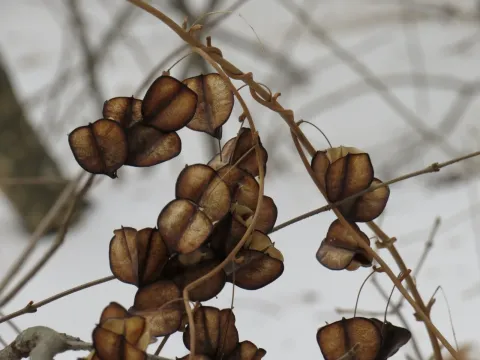
Wild yam
Dioscorea villosa
Wild yam (Dioscorea villosa) is typically propagated via seeds, which require a period of cold stratification for several months to successfully break dormancy and achieve germination.
What the section contains
Wild yam
Sowing in open field conditions is best performed in early spring once the threat of frost has passed and the soil has reached an adequate temperature for steady growth.
Seeds should be planted at a shallow depth of approximately 1 to 2 centimeters, ensuring the soil remains consistently moist but not saturated during the critical germination phase.
For commercial agricultural purposes, vegetative propagation is preferred as it yields faster and more uniform results compared to sowing seeds from scratch.
Small segments of healthy rhizomes containing dormant buds are planted into furrows at a depth of 10-15 centimeters, spacing plants appropriately to ensure optimal foliage development.
As a member of the Dioscoreaceae family, wild yam is a climbing perennial native to North America, flourishing in woodland areas with high humidity and rich organic soil.
The crop demands a well-drained soil structure; while it enjoys consistent moisture, it is highly sensitive to waterlogging, which often leads to root rot issues.
Soil quality should be maintained with generous applications of organic matter, and the pH levels should range from slightly acidic to neutral for the best nutrient uptake.
In terms of light, the plant performs best in locations that provide partial shade or dappled sunlight, mimicking its natural forest-floor habitat.
Environmental conditions require a moderate climate, with appropriate winter mulching to protect the rootstocks from severe frost in colder production regions.
The primary concern for wild yam growers is the development of fungal pathogens, particularly root rot, which is triggered by excessive soil moisture and poor drainage.
Powdery mildew represents a significant threat during humid summer months, necessitating effective fungicide application and good air circulation around the vines.
Soil-dwelling pests, including wireworms and white grubs, can cause mechanical damage to the rhizomes, leading to secondary infections and reduced marketable yield.
Aphids and spider mites may infest the foliage during dry spells, which requires constant monitoring and integrated pest management strategies to mitigate crop loss.
Good agricultural practices such as implementing crop rotation and maintaining weed-free rows help create a robust defense against common diseases and pests.
The commercial harvest of wild yam is focused on its rhizomes, which contain valuable steroidal saponins used extensively in the pharmaceutical and herbal industries.
Harvesting is typically conducted after 3 to 4 years of growth to ensure the roots have achieved sufficient size and high concentrations of active biochemical compounds.
The roots are carefully extracted from the soil during the dormant season, minimizing cuts or abrasions that could compromise the shelf life of the harvested biomass.
Immediately after harvesting, the material is cleaned of debris, washed, and dried in ventilated processing chambers at controlled low temperatures to preserve potency.
Stored raw materials must be kept in cool, dark, and dry conditions to prevent the degradation of active ingredients caused by moisture or exposure to light.