
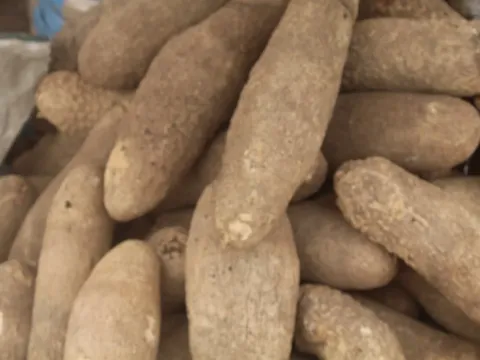
White yam
Dioscorea rotundata
Dioscorea rotundata, commonly known as white yam, is a staple tuber crop in tropical regions. Planting typically occurs at the onset of the rainy season to ensure optimal moisture availability during the initial growth phase.
What the section contains
White yam
Seed yam setts, weighing about 150-200 grams, are prepared from healthy tubers. These setts must contain active buds or eyes, which are essential for sprouting and vigorous early development.
Planting depth is maintained between 10 and 15 centimeters. Ridges are constructed to provide a loose soil structure, which is vital for the downward expansion of the developing tubers as the season progresses.
Soil temperature should be consistently warm, preferably above 25°C, to ensure rapid emergence. Cold spells during the early sprouting period can severely hinder growth and reduce overall crop vitality.
Proper spacing is crucial, with row widths of approximately one meter. This distance facilitates mechanized operations and ensures that the climbing vines have sufficient space to develop their canopy without excessive competition.
White yams thrive in deep, well-drained, and loose loamy soils rich in organic matter. Soil compaction is a major inhibitor of tuber growth, often resulting in deformed or underdeveloped harvests.
As a climbing plant, the white yam requires strong, vertical support structures. Staking is not just a preference but an agronomic necessity to improve air circulation, leaf photosynthesis, and to prevent soil-borne pathogens.
The crop demands full exposure to sunlight for most of the day. While some shade may be tolerated in the early weeks, excessive canopy cover from weeds or nearby trees will significantly decrease tuber yield.
A balanced nutrient supply is essential, particularly potassium, which is critical for tuber bulking. Organic compost or balanced NPK fertilizers should be incorporated into the soil during land preparation.
Soil pH levels should remain within the slightly acidic range, from 5.5 to 6.5. This range optimizes nutrient bioavailability and prevents the proliferation of certain soil-dwelling bacteria that cause tuber rot.
Under optimal management practices, the yield of white yam can range from 20 to 30 tons per hectare. Intensive farming techniques and improved varieties can push these yields significantly higher.
The growth cycle is relatively long, typically lasting from 6 to 10 months depending on the specific cultivar and local climatic conditions. Harvesting begins when the vines naturally turn yellow and senesce.
Marketable yield depends on producing tubers of uniform shape and size. Farmers often practice careful selection of planting material to maintain these quality standards across consecutive generations of the crop.
Storage potential is a defining characteristic of white yam. With proper curing and ventilation, the tubers can be stored for several months, ensuring food security during periods of low production.
Monitoring the harvest date is critical to prevent field losses. Leaving tubers in the ground after the vines have fully died back exposes them to potential pest attacks and unnecessary decay.
Nematodes represent the most severe threat to white yam production, as they bore into tubers and render them unmarketable. Integrated pest management, including crop rotation, is essential for control.
Anthracnose is a frequent fungal disease that spreads rapidly in high humidity. It affects both foliage and stems, often leading to total yield collapse if left untreated during the rainy period.
Viral diseases, such as yam mosaic virus, are commonly transmitted by aphids. Because there is no chemical cure for these viruses, control focuses on using virus-free setts and controlling insect vectors.
Various beetles and rodents can also damage maturing tubers. Fencing, field sanitation, and regular inspection of the plantation are basic yet effective defense strategies against these vertebrate and invertebrate pests.
Developing resistance through breeding programs is the primary long-term solution. Utilizing certified disease-free seed material remains the best practice for farmers to minimize risks during the growing season.
Harvesting white yams requires precision to avoid damaging the delicate skin of the tubers. Any physical bruise provides an entry point for fungi and bacteria that cause post-harvest rot.
The use of specialized digging forks or shallow mechanical plow attachments is recommended. The process should be conducted with care to extract the entire tuber system without severing the main mass.
Post-harvest curing is an important step that involves keeping the tubers in a shaded, well-ventilated area for several days. This allows minor skin abrasions to heal, significantly increasing shelf life.
Grading should take place immediately after harvest. Removing damaged or infected tubers early prevents the spread of rot within the storage piles and ensures the quality of the remaining stock.
For long-term storage, tubers should be kept in structures that allow cool air to flow freely. Avoiding direct contact with the ground or moisture is essential to keep the tubers dormant and fresh.