
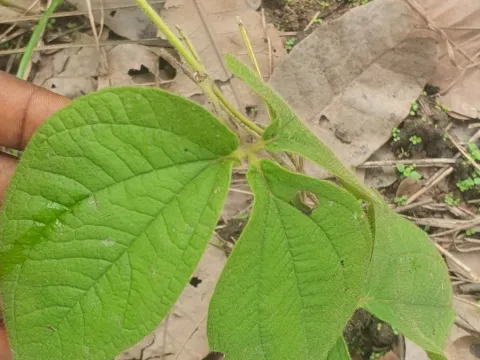
Bitter yam
Dioscorea dumetorum
Planting of Dioscorea dumetorum usually begins with the onset of the rainy season, which is essential to provide sufficient soil moisture for successful tuber establishment and early vegetative growth.
What the section contains
Bitter yam
The propagation material consists of healthy, disease-free whole tubers or cut sections weighing between 50 and 100 grams. It is vital to ensure the tubers are firm and show no signs of rot.
Tubers are planted in prepared ridges or mounds at a depth of 10 to 15 centimeters. A spacing of about one meter between rows and 50–60 centimeters between individual plants is ideal for canopy management.
Deep soil tillage is recommended before planting to ensure a friable environment for the developing tubers. Applying organic matter directly into the planting holes boosts the initial growth of the vines.
Soil temperature should remain consistently between 20 and 25 degrees Celsius to trigger active sprouting. Temperatures below this range can cause the planting material to remain dormant or decay in the wet soil.
Bitter yam is a perennial vine belonging to the Dioscoreaceae family. It thrives in tropical climates characterized by high humidity and consistent sunshine, which is required for effective photosynthesis.
The crop requires deep, well-drained loamy or sandy soils rich in organic matter. Waterlogged conditions are detrimental to the root system and frequently lead to severe fungal issues.
Stable temperatures between 25 and 30 degrees Celsius are optimal for growth. If rainfall is irregular, supplemental irrigation is necessary to maintain tuber size and prevent stress-induced yield losses.
Providing climbing support is a critical agronomic requirement for bitter yam. In traditional farming, trees or custom-built trellis structures are used to lift the vines, allowing for better light interception and airflow.
Soil pH should ideally range from 5.5 to 6.5. Deviations from this range can lead to nutrient imbalances and restrict the plant's ability to uptake vital minerals from the soil profile.
Yields of Dioscorea dumetorum vary significantly based on environmental conditions and crop management. Under optimized conditions, yields can reach 10 to 20 metric tons per hectare.
The total growth cycle spans between 7 and 9 months. Tuber size is highly responsive to nitrogen and potassium levels; sufficient potassium is especially important for the accumulation of starches.
Bitter yam is known for its potential to develop bitter alkaloids. Selective breeding has focused on developing cultivars that minimize these compounds, enhancing the culinary quality of the final harvest.
Mulching is a standard practice that helps conserve soil moisture and suppresses weed competition. A clean field environment significantly reduces the competition for resources, resulting in larger, more uniform tubers.
The application of wood ash as a source of potassium is a proven traditional practice that improves both the starch content and the storage shelf-life of the harvested tubers.
Soil-borne pathogens are the primary threat, especially those responsible for tuber rots. These diseases are exacerbated by excessive soil moisture and poor drainage patterns within the field.
Nematodes represent a major pest issue, as they attack the tuber skin and create entry points for secondary bacterial infections. This not only stunts growth but also renders tubers unsuitable for long-term storage.
Leaf-eating caterpillars and weevils are the most common insect threats. Extensive defoliation reduces the plant's ability to store energy in the tubers, leading to a direct decline in total yield.
Implementing a strict crop rotation cycle—at least once every three years—is the most effective way to manage soil-borne pathogens and maintain a healthy, productive field environment.
Using certified, disease-free planting material and pre-planting fungicides are essential strategies to prevent the introduction of pathogens into the farm system.
Harvesting should commence once the aerial vines start to turn yellow and wither. This natural senescence indicates that the plant has ceased active growth and the tubers have reached maturity.
Care must be taken during harvest, as the tuber skin is susceptible to bruising and physical damage. Using hand tools like forks allows for precise extraction from the soil with minimal tuber cutting.
After extraction, tubers are cleaned of soil and cured in a shaded area. Direct sunlight must be avoided to prevent the synthesis of potentially toxic compounds and skin damage.
Storage requires cool, well-ventilated structures with moderate humidity. Proper storage conditions allow the tubers to remain dormant and firm for several months after the harvest season ends.
Processing requirements vary by cultivar, with some forms of bitter yam requiring specific soaking or cooking techniques to ensure safety and palatability for human consumption.