
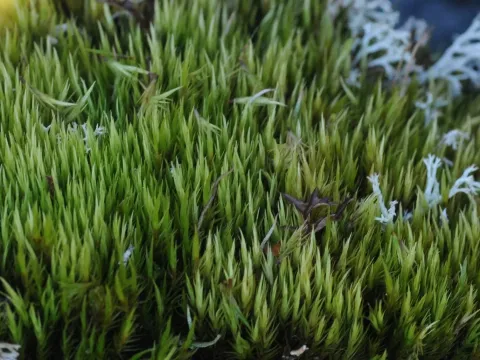
Campylopus schimperi
Campylopus schimperi
Campylopus schimperi is a perennial moss species belonging to the Dicranaceae family. Unlike traditional agricultural crops, this species is a significant component of natural forest floor ecosystems, contributing to soil stability and moisture retention.
What the section contains
Campylopus schimperi
The plant typically thrives in humid environments with high atmospheric moisture levels. It is known for colonizing acidic substrates, often found in alpine regions or temperate forests where competitive vascular plants are less aggressive.
Botanically, this species forms compact, turf-like mats that effectively trap water and nutrients. Its growth pattern is adapted to low-light conditions, allowing it to survive beneath dense forest canopies where other plants struggle to photosynthesize.
Environmental requirements include a stable, pollution-free atmosphere. As a bryophyte, it is highly sensitive to air quality and changes in soil chemistry, making it a reliable bioindicator for monitoring environmental health in managed forestry areas.
In terms of ecological utility, it plays a vital role in preventing soil erosion and participating in nutrient cycling. By maintaining high surface humidity, it provides a favorable microenvironment for seed germination and the survival of various micro-fauna.