
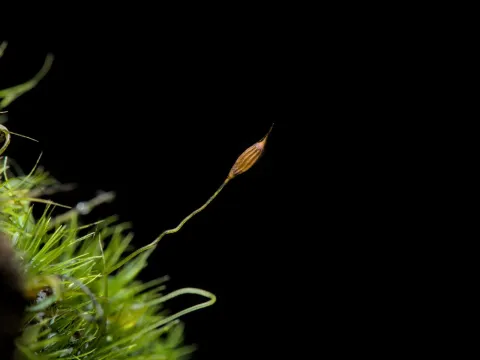
Campylopus pyriformis
Campylopus pyriformis
Campylopus pyriformis is a species of moss belonging to the Dicranaceae family. It is typically found in moist, acidic habitats, ranging from peatlands to disturbed forest soils where it often acts as a colonizing species.
What the section contains
Campylopus pyriformis
The plant forms tight, yellowish-green tufts that possess a remarkable ability to thrive in nutrient-poor substrates. Its resilience makes it an excellent subject for ecological restoration projects involving acidic soil remediation.
Climate requirements for this moss involve high atmospheric humidity and protection from extreme desiccation. While it tolerates light well, it prefers semi-shaded environments where its moisture requirements are more easily met throughout the year.
Regarding substrate, the moss performs best in soil with a pH between 4.0 and 5.5. It thrives in peat-based mixes or on decaying organic material, which mimics its natural habitat conditions effectively.
The reproduction strategy of Campylopus pyriformis is primarily vegetative, utilizing specialized brood buds (gemmae). This allows for rapid coverage of the surface area when environmental conditions are optimal for growth.
The primary threat to the stability of Campylopus pyriformis populations is the drainage of wetlands and peat bogs. Loss of moisture leads to immediate physiological stress and eventual death of the moss colonies.
Pollution, particularly the accumulation of nitrogen-based pollutants in the substrate, can alter the chemical balance of the environment, making it unsuitable for this acidophilic species.
Succession by vascular plants represents another major risk factor. As the landscape matures and larger plants begin to dominate the space, the moss is often outcompeted for light and space in the environment.
Pathogenic fungi are a significant threat when the moss is kept in stagnant, poorly ventilated conditions. Over-watering creates an environment favorable for fungal infections that can rapidly destroy the delicate structure of the tufts.
Mechanical disturbance can significantly damage the moss surface. Because growth is relatively slow, recovering from physical disruption such as trampling or over-handling requires careful management and consistent environmental control.