
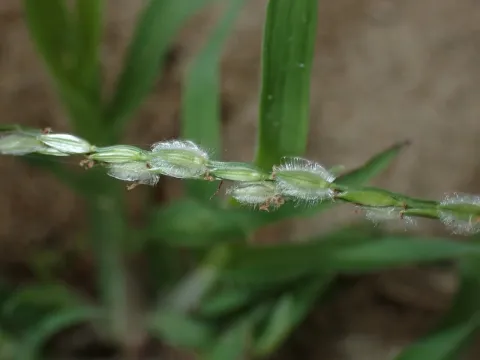
Digitaria commutata
Digitaria commutata
Digitaria commutata is an annual grass species that thrives during warm weather. Planting should be scheduled for late spring when soil temperatures consistently reach at least 12-15°C to ensure rapid and uniform germination of the seeds.
What the section contains
Digitaria commutata
The sowing depth is critical for this species due to its small seed size. It should be planted at a shallow depth of approximately 1-2 cm. Deeper placement can significantly reduce emergence rates as seedlings may lack the energy to push through the soil surface.
A standard drilling method is usually employed, with row spacings of 15-20 cm. The seeding rate generally ranges from 10 to 15 kilograms per hectare, depending on local conditions and the intended use of the crop (forage or seed production).
Post-sowing soil compaction is highly recommended. Using a roller after seeding ensures proper seed-to-soil contact, which is vital for moisture absorption and preventing the soil from drying out around the seeds.
Early-season weed control is essential because Digitaria commutata grows slowly during the initial establishment phase. Proper field preparation before sowing can minimize early competition from invasive weeds.
This grass species requires full sun exposure to achieve its maximum potential. Shaded areas significantly suppress growth and development, leading to lower yields and poor nutritional quality of the biomass produced.
It prefers light, well-draining soils such as sandy loams. Heavy, waterlogged soils are detrimental to the root system, causing poor aeration and increasing the likelihood of root diseases during the peak growing season.
While relatively hardy, it performs best with consistent moisture levels. During periods of prolonged drought, growth can stall, so supplementary irrigation is beneficial in commercial setups to maintain steady biomass production.
Fertilization is a key factor in maximizing yields. Applications of nitrogen-based fertilizers during the tillering stage significantly boost the production of vegetative mass, provided that phosphorus and potassium levels are balanced.
The optimal pH range for this crop is between 6.0 and 7.0. If the soil is too acidic, liming is recommended before sowing to ensure that the plant can effectively uptake necessary soil nutrients.
The yield of Digitaria commutata is heavily dependent on soil fertility and moisture management. In optimal conditions, it provides a dense, nutritious stand suitable for livestock feed or hay production.
Green biomass yields can range from 15 to 25 metric tons per hectare depending on the intensity of the crop management program, including the frequency of irrigation and the levels of supplemental fertilization.
Seed production yields generally range between 400 and 600 kilograms per hectare. Harvesting must be timed precisely, as the seeds have a natural tendency to shatter once they reach full physiological maturity.
Nutritional value is highest before the flowering stage. If harvested for forage, it is essential to cut the crop before the stems become overly lignified to ensure high digestibility for livestock.
By implementing a multi-cut system, farmers can maximize the total annual dry matter yield. Managing the timing of cuts allows the plants to recover and produce a second or third growth flush during the growing season.
Fungal diseases, particularly rusts, can affect the leaves of Digitaria commutata during periods of high humidity and poor air circulation. Symptoms include orange or brown pustules that reduce photosynthesis.
Grass-feeding insects, such as various species of flies and beetles, can damage the stems or leaves. Monitoring the field during the early stages of growth is important to determine if intervention is necessary.
Root rots may occur if the crop is planted in poorly drained fields. The best defense is ensuring good site selection and maintaining proper moisture levels throughout the life of the plant.
Weed management should focus on cultural practices rather than heavy reliance on herbicides. Maintaining a thick, healthy stand of the desired grass is often the most effective method for suppressing competing weeds.
Chemical intervention should be used only as a last resort. If pest populations exceed economic thresholds, consult local agricultural extension services to identify the most appropriate and safe treatments available.
For high-quality forage, the harvest should occur just before the plants enter the reproductive phase. This timing ensures the best balance between biomass quantity and protein content in the foliage.
When producing hay, the crop should be turned regularly in the swaths to allow for even drying. Over-drying should be avoided, as it leads to excessive shattering of the nutrient-rich leaf fraction.
Seed harvest requires machinery set to minimize mechanical loss. Direct combining is common, but it must be performed at the correct moisture content to prevent seeds from being damaged or lost during the threshing process.
Post-harvest handling involves drying the seeds in a clean, ventilated environment. Storing the seeds at moisture levels below 14% is critical to preventing fungal growth and ensuring high germination rates for future seasons.
Once the harvest is complete, the remaining stubble can be incorporated into the soil. This practice helps return organic matter to the field, improving soil structure for future crop rotations.