
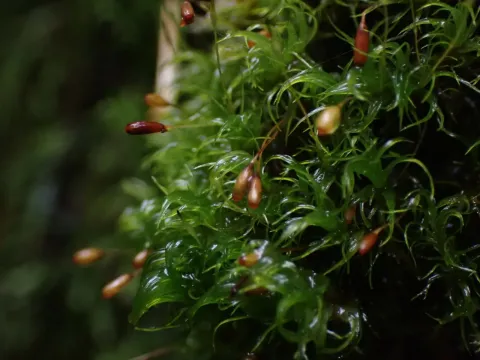
Cynodontium jenneri
Cynodontium jenneri
Cynodontium jenneri is a species of moss belonging to the Dicranaceae family. It is crucial to clarify that this organism is not an agricultural crop but a wild bryophyte with specific ecological requirements found in nature.
What the section contains
Cynodontium jenneri
The distribution of this species is largely determined by the availability of moisture and stable forest microclimates. It typically inhabits shaded, humid environments, often forming colonies on rocky substrates or decaying organic matter.
Botanically, it features a characteristic structure adapted to absorbing moisture directly from the environment. As it does not possess utility as a food or industrial crop, it is not subject to standard agricultural practices or field cultivation.
Its environmental requirements are extremely restrictive, necessitating high atmospheric humidity and relatively low temperatures. Direct sunlight and high heat pose significant stress to its biological systems, often leading to rapid dehydration.
In terms of agricultural management, there is no place for this species in farming. Efforts regarding this moss are strictly related to environmental science and the protection of biodiversity within its natural, undisturbed habitats.
The primary threat to Cynodontium jenneri is the destruction of natural habitats, particularly through deforestation and urbanization. Loss of old-growth forests directly eliminates the niches required for its survival.
Atmospheric pollution remains a severe hazard for all mosses, as they lack protective cuticles that prevent the absorption of airborne toxins. Industrial emissions can lead to the rapid disappearance of local colonies.
Changes in local hydrology, such as drainage or prolonged droughts, severely impact the survival rate of these bryophytes. Because they rely on ambient moisture, even minor climate shifts can prove fatal for local populations.
Human activities, such as trampling or clearing of deadwood, cause mechanical damage that the moss cannot easily recover from. This fragility makes it an indicator species for ecological health.
Conservation strategies focus on the preservation of sensitive forest areas where the species is known to exist. No pest control or disease management is applicable, as the focus remains solely on ecosystem integrity.