
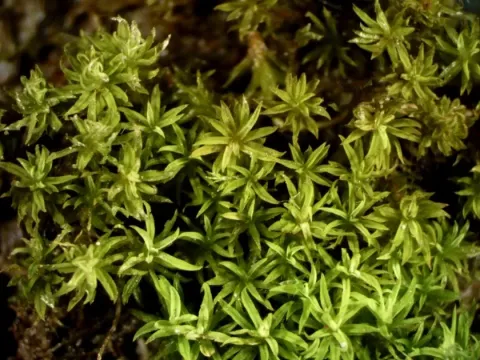
Campylopus subulatus
Campylopus subulatus
Campylopus subulatus is a perennial moss belonging to the Dicranaceae family. It is known for its compact, cushion-forming growth habit, which allows the plant to thrive in competitive environments where resources are limited and substrates are challenging for higher plants.
What the section contains
Campylopus subulatus
This species is typically found in habitats with sandy, well-drained soils, often appearing on exposed or semi-shaded surfaces. It exhibits a high tolerance for varying moisture levels, though it relies on consistent atmospheric humidity to support its biological processes and reproduction.
Regarding climatic demands, the plant requires temperate conditions with sufficient rainfall to ensure cell turgidity. Unlike agricultural crops, it does not have specific requirements for soil fertilization; instead, it derives nutrients from precipitation and mineral decomposition.
In terms of propagation and establishment, the moss relies on spore dispersal and vegetative fragmentation. It serves as an ecological pioneer species, capable of colonizing barren sites and laying the foundation for more complex vegetative cover over time.
While not a traditional agricultural crop, its practical importance lies in environmental restoration. Its dense structure protects the soil surface from erosion and plays a vital role in moisture retention within forest floor ecosystems and reclaimed landscapes.
The primary threats to Campylopus subulatus include mechanical disturbance from heavy foot traffic and habitat destruction. Pollution, particularly acidic precipitation and high levels of atmospheric dust, can interfere with the physiological functions of the moss shoots.
Fungal infections can occur if the local environment experiences prolonged waterlogging, which weakens the plant tissue. Maintenance of the natural drainage and air quality is the most effective way to prevent the decline of this bryophyte in its natural range.