
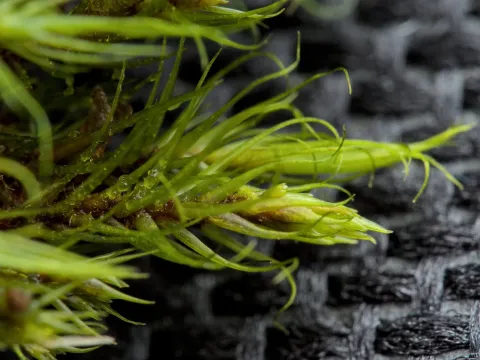
Campylopus flexuosus
Campylopus flexuosus
Campylopus flexuosus is a member of the Dicranaceae family, representing a significant group of acrocarpous mosses. It typically grows in dense, cushion-like tufts that contribute to the moisture retention of forest floors.
What the section contains
Campylopus flexuosus
This species thrives in habitats characterized by high atmospheric humidity and acidic soil conditions. It is frequently encountered on decayed wood, peat bogs, and moist, nutrient-poor soils within temperate forest ecosystems.
Environmental requirements for Campylopus flexuosus center on stable shade and moisture levels. It is highly sensitive to rapid dehydration and thrives best when shielded from direct, intense sunlight, which could disrupt its delicate water-balance mechanism.
From an ecological perspective, this moss is an effective soil stabilizer. Its dense growth pattern helps to minimize surface erosion in humid forest environments and creates a favorable microenvironment for the germination of other forest vegetation.
Regarding its biological cycle, the moss exhibits resilience to cold stress, allowing it to maintain physiological integrity during winter. While not a commercial crop in the traditional sense, its presence is a key indicator of site-specific forest health and humidity levels.