
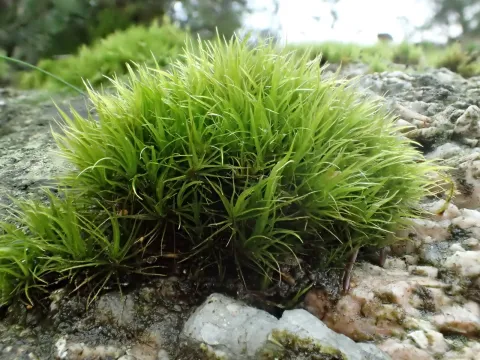
Campylopus gracilis
Campylopus gracilis
Campylopus gracilis is a member of the Dicranaceae family, representing a specialized group of acrocarpous mosses. It is recognized by its slender habit and compact cushion-like growth patterns that allow it to colonize specific niche environments in temperate forest regions.
What the section contains
Campylopus gracilis
The distribution of this species is tied to humid climates where it thrives in shaded, cool areas. It is frequently identified in woodland habitats, often anchoring itself onto substrates such as decaying logs, moist humus, or acidified rocky crevices.
Botanically, the plant features narrow, lanceolate leaves that remain tightly appressed to the stem under dry conditions. This anatomical adaptation is a key survival strategy, minimizing transpirational water loss during short-term drought periods.
The environmental requirements for optimal growth focus heavily on soil acidity and constant moisture. The species is highly adapted to low-nutrient, acidic substrates, where it actively participates in the retention of moisture and the slow decomposition of organic matter.
As a biological indicator, the presence of Campylopus gracilis typically signals a stable, moist ecosystem with clean air. Its ecological value lies in its role as a primary stabilizer for the top layer of forest soil, preventing erosion and maintaining humidity levels.