
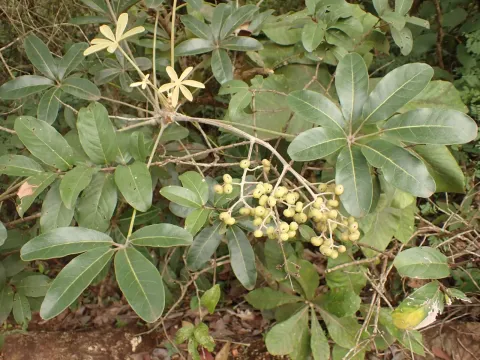
Didymopanax
Didymopanax
Didymopanax belongs to the Araliaceae family and consists of woody species native to the tropical regions of Central and South America. These plants are appreciated for their structural beauty and distinct foliage.
What the section contains
Didymopanax
Botanically, the plant is characterized by its palmately compound leaves and growth habits ranging from shrubs to small trees. It is a popular choice for large interior spaces and conservatory settings due to its lush appearance.
The plant requires a stable environment with temperatures maintained between 18°C and 24°C. High atmospheric humidity is crucial, as the plant naturally thrives in humid forest conditions where moisture levels are consistently high.
Soil requirements involve a well-draining, nutrient-rich substrate. A mix of peat, bark, and perlite is often used to replicate the organic-rich, airy soil found in its native tropical habitats, preventing root suffocation.
Agrotechnical care focuses on providing bright, indirect light. Direct sunlight exposure should be avoided to prevent leaf scorch, while seasonal fertilization during the growing period promotes vibrant leaf development.
Overwatering is the primary threat to the health of Didymopanax. Persistent saturation of the root zone quickly leads to root rot, which is often irreversible if not addressed during the early stages.
Spider mites are the most significant pests in indoor settings. They thrive in dry conditions and can cause significant damage to foliage if humidity levels are not strictly managed through regular misting.
Scale insects present a secondary but serious threat by feeding on sap and weakening the structure of the plant. Manual removal or appropriate systemic insecticides are recommended for effective management.
Poor ventilation and high humidity without air movement can encourage fungal infections such as powdery mildew. Proper spacing between plants and regular airflow are vital preventive measures.
Leaf drop is a common stress response to drafts or sudden temperature changes. Maintaining a stable climate is the most effective way to ensure the plant remains vigorous and aesthetically pleasing year-round.