
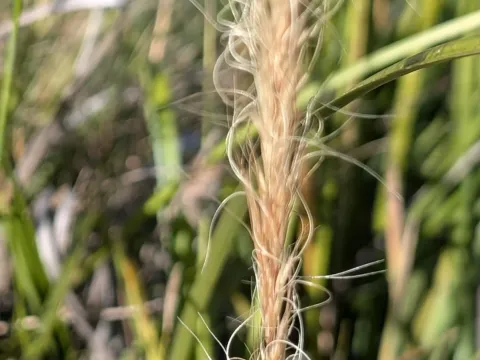
Dichelachne sciurea
Dichelachne sciurea
Dichelachne sciurea, commonly known as short-hair plume grass, is a perennial grass species belonging to the Poaceae family. It is valued for its hardiness and ability to thrive in diverse environmental conditions.
What the section contains
Dichelachne sciurea
The sowing process is typically carried out in spring when the soil temperature consistently reaches 15 degrees Celsius. Seeds should be sown at a shallow depth of approximately 0.5 to 1 cm to ensure optimal germination and light exposure.
For establishing a uniform pasture, broadcasting or drilling methods are used, depending on the site preparation. Maintaining proper seed-to-soil contact is essential for uniform emergence in the early stages.
Since the initial growth phase of this grass is relatively slow, it is crucial to protect the seedlings from aggressive weed competition. Manual weeding or selective mechanical cultivation between rows can support better establishment.
Irrigation during the establishment period is necessary to keep the topsoil consistently moist. Once established, the root system develops significantly, increasing the plant's overall resilience and survival rate in subsequent years.
Dichelachne sciurea is adaptable to various soil types, ranging from sandy loams to heavier clay soils. However, it performs best in soils with good drainage, as waterlogged conditions can inhibit root health and growth.
The plant thrives in full sun exposure. While it exhibits some tolerance to partial shade, productivity, particularly in terms of biomass and seed production, is significantly higher in areas with unobstructed sunlight.
Regarding moisture, the species shows moderate drought tolerance. It is well-suited for regions with seasonal rainfall patterns but benefits from supplementary irrigation during prolonged dry spells to maintain productivity.
Soil nutrient management should focus on balanced NPK fertilization. Phosphorus is particularly important during the early stages of growth to encourage robust root development, while nitrogen helps in leaf biomass accumulation.
The species is climate-resilient, capable of enduring wide temperature fluctuations typical of its native range. It is known to possess moderate cold tolerance, allowing it to survive cool winters if not exposed to extreme frost.
Pathogenic fungi pose the primary biological threat to the crop, with rust diseases being the most common. These infections typically appear during periods of high humidity and poor air circulation within the stand.
Insect pests, such as aphids and grasshoppers, can cause damage to the foliage, which reduces the overall yield and nutritional quality of the plant. Regular field scouting is advised during the peak growing season.
Root rot is a potential issue in poorly drained fields, especially after heavy rains. Ensuring proper land leveling and soil drainage is essential to mitigate these risks and maintain a healthy crop rotation.
Weed management remains the most critical task for the first few months. If weeds are not managed, they can quickly overtake the slower-growing seedlings and significantly reduce the final stand density.
Integrated pest management (IPM) is highly recommended for this crop. By maintaining soil health and promoting biodiversity, farmers can naturally reduce the incidence of diseases and pests without excessive chemical inputs.
Harvesting Dichelachne sciurea for forage is typically performed before the seed heads fully mature to ensure the highest protein content and digestibility of the leaves. Multiple cuts per season may be possible under favorable conditions.
If the goal is seed harvesting, the plants should be left in the field until the seeds are fully developed and change color. Harvesting should occur in the dry period to prevent grain moisture issues and potential molding.
Mechanical harvesting equipment, such as forage harvesters or swathers, is generally suitable. It is important to adjust the cutting height to avoid damaging the base of the plant, which promotes faster regrowth.
Post-harvest management involves drying the biomass properly before storage. Ensuring low moisture levels in hay is crucial to prevent heating and fungal growth during the storage phase, preserving its nutritional value.
Storage facilities must be dry and well-ventilated. Proper stacking of bales or bags allows for better airflow, extending the shelf life of the harvested material and ensuring it remains safe for livestock consumption.