
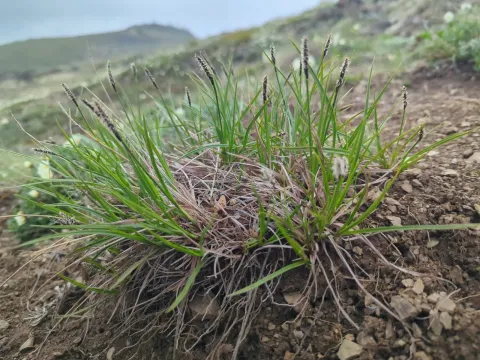
Scirpoid sedge
Carex scirpoidea
Scirpoid sedge (Carex scirpoidea) is a resilient perennial plant belonging to the Cyperaceae family. It is predominantly recognized for its ecological importance in cold climates, where it demonstrates high adaptability to nutrient-poor and moisture-retentive soils.
What the section contains
Scirpoid sedge
Cultivation practices involve sowing seeds in a well-prepared seedbed during the early spring. Since the seeds exhibit dormancy, cold stratification is often necessary to achieve a high germination rate under agricultural conditions.
The establishment of this crop is slow, as the plant invests significant energy into developing its root system. Once established, however, it spreads efficiently via rhizomes, creating a dense turf that is highly resistant to environmental stressors.
In field production, direct seeding is preferred, provided that the soil surface is maintained in a moist state during the critical germination phase. Over-seeding may be required if competition from invasive species is anticipated.
The density of planting should be managed to ensure adequate air circulation between individual clumps, preventing the development of disease patches within the field.
The Scirpoid sedge prefers environments with consistent moisture levels. While it is adaptable to various soil types, it performs best in peaty or loamy soils that possess a slightly acidic to neutral pH level.
Sunlight requirements are quite high for optimal development. Exposure to full sun promotes the formation of robust, fertile spikes and ensures that the rhizome network remains healthy throughout the growing season.
Temperature management is critical; the plant is exceptionally cold-hardy, thriving in regions with short growing seasons. However, it can struggle in extreme heat, which may trigger early senescence of the foliage.
Fertilization should be handled with care. Excess nitrogen can lead to excessive green growth that weakens the plant's structural integrity. A balanced, slow-release fertilizer is recommended to support sustainable growth.
Water management through controlled drainage is essential if the crop is grown in low-lying areas. While the plant loves water, stagnant conditions can encourage root rot and degrade the quality of the harvest.
Diseases in Carex scirpoidea are often linked to fungal pathogens that thrive in wet conditions. Maintaining optimal spacing is the primary defense against the spread of such infections across the crop canopy.
Pest pressures are generally low compared to conventional grain crops, but soil-dwelling insects can pose a significant threat to the root system, potentially causing yield losses and plant mortality.
- Rust diseases affecting the leaves.
- Rhizome rot under improper drainage.
- Aphid infestations during the flowering stage.
- Competition from woody perennial weeds.
- Nutrient deficiencies in highly leached soils.
Integrated pest management strategies should focus on preventing the buildup of plant residue, which can host fungal spores during the winter months. Periodic scouting is advised during the peak growing season.
If chemical interventions are necessary, they should be applied with precision to avoid harming the plant's delicate tissues, as certain active ingredients may exhibit phytotoxicity.